Hybrid work has changed what employees expect from the office and what companies need from their real estate. When employees aren’t coming in five days a week, assigning a permanent desk to every person can leave a lot of expensive space sitting empty. That’s why more workplaces are turning to flexible seating models such as hot desking and office hoteling.

They sound similar, and they solve the same problems. But there’s one important difference:
Hot desking usually means employees choose from available desks when they arrive.
Hoteling means employees reserve a workspace in advance.
That small distinction can have a surprisingly big impact on employee experience, space utilization, workplace operations, and the technology you need.
So, when comparing hot desking vs hoteling, which approach makes more sense for your office?
Here’s how to decide.
The right choice between hot desking and hoteling depends on how employees actually use your workplace.
Hot desking | Office Hoteling | |
Desk ownership | No permanent assigned desk | No permanent assigned desk |
How you get a desk | Choose an available desk when you need one | Reserve a desk for a specified time |
Advance reservation | Traditionally no | Yes |
Predictability | Lower | Higher |
Spontaneity | Higher | Lower, depending on booking rules |
Team seating | Harder to coordinate | Easier to coordinate intentionally |
Technology | Can work without booking software | Usually depends on a reservation system |
Utilization data | Limited unless separately measured | Booking data is built in; actual occupancy may still need check-in/sensor data |
Administration | Simple policy, but capacity can be harder to govern | More setup and booking governance |
Best fit | Smaller or less complex flexible offices | Larger or more structured hybrid workplaces where certainty and coordination matter |
Table 1: Hot desking vs hotelling key differences comparison table (2026).
Hot desking vs hoteling vs desk sharing and assigned seating
The desk-sharing space comes with its fair share of overlapping terms and definitions, and they’re not always used consistently. So before we go any further, let’s clarify the basics and see how hot desking, hoteling, desk sharing, and assigned seating relate to one another.
Desk sharing is the umbrella concept: more than one employee uses the same physical workstations at different times rather than every employee having a permanent desk.
Hot desking is one way to implement desk sharing. Under the traditional definition used in this article, employees choose from currently available desks rather than reserving one ahead.
Desk hoteling / office hoteling is another implementation. Employees still share desks, but reserve particular workspaces for defined periods.
Assigned seating gives an employee a permanently designated workstation. The desk may remain unused when that person works remotely, but the trade-off is consistency, personalization and predictable access.
Activity-based working is different again. It is a broader workplace strategy designed around providing different environments for different activities such as focus work, calls, collaboration, meetings and so on. An ABW workplace commonly uses unassigned seating, but “ABW” should not be reduced to a synonym for hot desking.
A simple way to remember it:
Desk sharing = the umbrella.
Hot desking = share without advance reservation.
Hoteling = share with reservations.
Assigned seating = keep your own desk.
ABW = choose spaces according to the work you are doing.
What Is Hot Desking?
Hot desking is a flexible seating model in which employees do not permanently own a particular desk. Under the traditional model, you arrive at the office, find an available workstation, use it for the day or part of the day, and leave it available for somebody else afterward.
Think of it as first come, first served.
An employee might sit near a window on Tuesday, beside a teammate on Thursday, and in a completely different part of the office the following week.
The goal is simple: rather than maintaining one desk for every employee, even when many of those desks are empty, multiple employees can share the same pool of workstations.
Hot desking can work particularly well in offices where attendance is flexible and employees don't need specialized equipment or a particular location to do their jobs.
Hot desking pros and cons
The biggest advantages of hot desking are simplicity and spontaneity. Employees do not need to plan every office visit in an app, and a company can share workstations instead of maintaining a permanently assigned desk for every hybrid employee.
The main disadvantages are the other side of the same coin. A desk is not guaranteed; preferred workspaces may already be occupied; teams can end up scattered; and employees cannot permanently personalize or store belongings at a particular desk.
The lesson is not that hot desking is inherently good or bad. Execution matters. Leesman analyzed around 476, thousand post-pandemic workplace respondents and found that people using unassigned workstations with the right variety of workspace types reported dramatically better experiences than those using unassigned workstations without that variety. The latter group recorded an Lmi workplace-experience score of 51.1, versus 79.0 for unassigned workplaces with appropriate variety.
So simply removing nameplates from desks is not a workplace strategy. If you want to learn more, we cover the benefits and drawbacks of hot desking in more detail in our dedicated article.
What is hoteling?
Office hoteling, also called desk hoteling or workspace hoteling, uses the same basic idea of shared desks but adds one crucial step: employees reserve the workspace they want before using it.
Instead of arriving and searching for an open desk, an employee might use a workplace app or desk booking system to reserve a workstation for Wednesday from 9 a.m. to 5 p.m. Depending on the system, they may also be able to see where coworkers are sitting, select particular neighborhoods, compare desk amenities, or reserve meeting rooms as part of the same visit.
In other words, hoteling adds a reservation layer to flexible seating.
How does office hoteling work?
A typical hoteling workflow looks like this:
Find a space → reserve it → arrive → check in → use it → check out or release it.
Desk reservation systems commonly show available desks, locations and workspace attributes. More sophisticated tools such as Dibsido can also let employees find colleagues, book adjacent desks, enforce booking windows and automatically release reservations after a no-show.
The important analytical distinction is between bookings and actual occupancy. A reservation tells you somebody intended to use a desk. It does not necessarily prove they arrived. That is why mature hoteling implementations often combine booking information with check-ins or other utilization data when workplace teams need to understand actual usage.
Hoteling pros and cons
The biggest benefit of hoteling is certainty. Employees can know before commuting that a suitable workspace is available, and teams can coordinate where they will sit. Reservation data also gives workplace teams visibility into expected demand that a purely first-come environment does not naturally produce.
The trade-off is process. Somebody has to configure the floor plan, booking rules and system; employees need to make and cancel reservations; and unused bookings can create “ghost reservations” that make a desk appear unavailable even though nobody is sitting there.
However, modern office hoteling tools such as Dibsido overcome these challenges with a straightforward UI and features that eliminate the usual drawbacks of hoteling.
Hot Desking vs Hoteling: Key Differences
The reservation is the obvious difference, but in practice, it is not the only one that matters in day-to-day operations. The right model changes how your office handles capacity, collaboration, employee expectations, workplace data, and administration.
Reservations and how employees access a desk
This is the defining distinction.
With traditional hot desking, the employee decides to come in and takes an available workspace. The allocation happens when they need the desk rather than through an advance reservation. With hoteling, the employee reserves a workspace before using it.
That sounds like a small procedural difference, but it changes the office experience. Hot desking treats current availability as the source of truth. Hoteling treats the reservation system as the source of truth.
There is a gray area around same-day booking. Some platforms call an on-demand or same-day reservation “hot desking,” while others still classify any reserved desk as hoteling. Don't spend too much time policing terminology internally. Define the behavior instead: Can people reserve this desk before they arrive? How far in advance? Is it guaranteed after booking? What happens if they do not check in?
Those rules matter more than the label. Our hot desking policy template writes them down in five short sections you can adapt.
Predictability and capacity risk
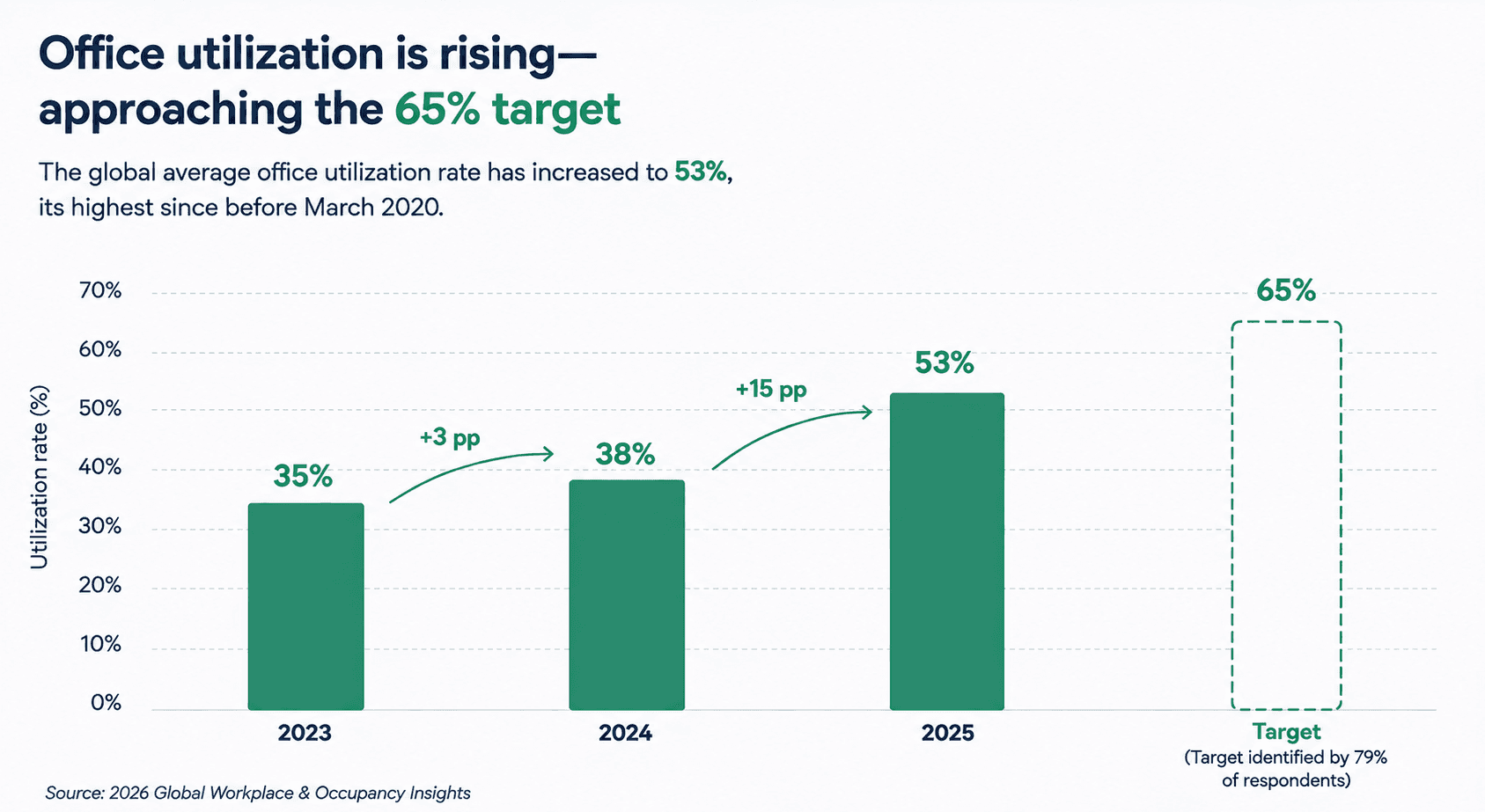
Fig. 1: Hybrid work is driving a new pattern of office utilization (CBRE, 2026).
Hot desking gives employees less certainty because an available desk exists only if demand has not exceeded the remaining supply. On quiet days, that may never be a problem. On peak days, it can become the entire problem.
Hoteling shifts that uncertainty earlier. Instead of discovering at 9:05 a.m. that every suitable workstation is occupied, an employee discovers availability while planning the visit. Once booked, they know what space they have.
Peak demand deserves more attention than average occupancy. CBRE’s 2026 Global Workplace & Occupancy Insights found that global average office utilization reached 53%, while peak utilization averaged 80%. That is why “our office is only half full on average” is a weak argument for unmanaged hot desking. Your decision should be based on busy-day demand and its variability, not the annual average alone.
Flexibility and spontaneity
Traditionally, hot desking is the more spontaneous model. An employee can change plans at the last minute, come in and use whatever is available. There is no need to remember a reservation, cancel a booking or decide several days beforehand where to sit.
Hoteling introduces structure. That does not automatically make it inflexible: a well-designed system can permit bookings five days ahead, five minutes ahead, or both. But there is still a transaction between deciding to work in the office and claiming the resource.
The practical question is therefore not “Does our culture value flexibility?” Almost every hybrid company will say yes.
Ask instead: “How often do people decide to come in at the last minute, and how costly would it be if a suitable desk were unavailable?”
When last-minute attendance is common and spare capacity is comfortable, hot desking can be beautifully simple. When the commute is significant or peak capacity is tight, reservation certainty becomes more valuable.
Team coordination and collaboration
A desk is only part of the reason somebody comes to the office. Often, the person they want to work with matters more than the furniture.
Suppose eight product-team members agree to come in on Wednesday. Under unmanaged hot desking, that does not guarantee they will sit anywhere near one another. The first three might get adjacent desks, while the remaining five end up on different floors.
Hoteling can make co-location intentional. Employees or teams can reserve nearby desks, a neighborhood or other appropriate spaces ahead of the collaboration day.
Employee experience and personalization
Both models remove the permanent relationship between one employee and one desk. That can mean fewer opportunities to leave personal items, keep equipment permanently configured or create a sense of “my space.”
Hoteling reduces one particular source of this friction: uncertainty about where someone will sit. But it does not automatically make an unassigned workplace enjoyable.
So when someone asks whether employees prefer hot desking or hoteling, the honest answer is: the booking mechanism matters, but the quality of the workplace experience may matter even more.
Workplace data and space planning

Fig. 2: 78% of organizations use utilization data to calibrate desk-sharing ratios. (CBRE, 2026)
A basic hot-desking office can tell you how many desks exist. Unless you add other measurement, it may tell you relatively little about who needed them, which spaces employees wanted, when demand peaked or why particular areas stayed empty.
Hoteling creates a structured trail of reservations. That can reveal demand by date, floor or workspace type and help workplace teams understand future requirements. But there is an important caveat: booking data is demand data, not necessarily occupancy data. A desk can be reserved and never used.
That is why check-in behavior, auto-release rules and other utilization measurements become valuable in mature deployments. CBRE’s 2026 workplace benchmarking shows that organizations are increasingly using utilization and supply-and-demand data to make decisions about desk sharing and space allocation.
The decision signal is simple: if leadership regularly asks, “Which space are we actually using, when, and by whom?”, hoteling or another instrumented flexible-seating model gives you a much stronger starting point than unmanaged first-come seating.
Technology, governance and operating cost
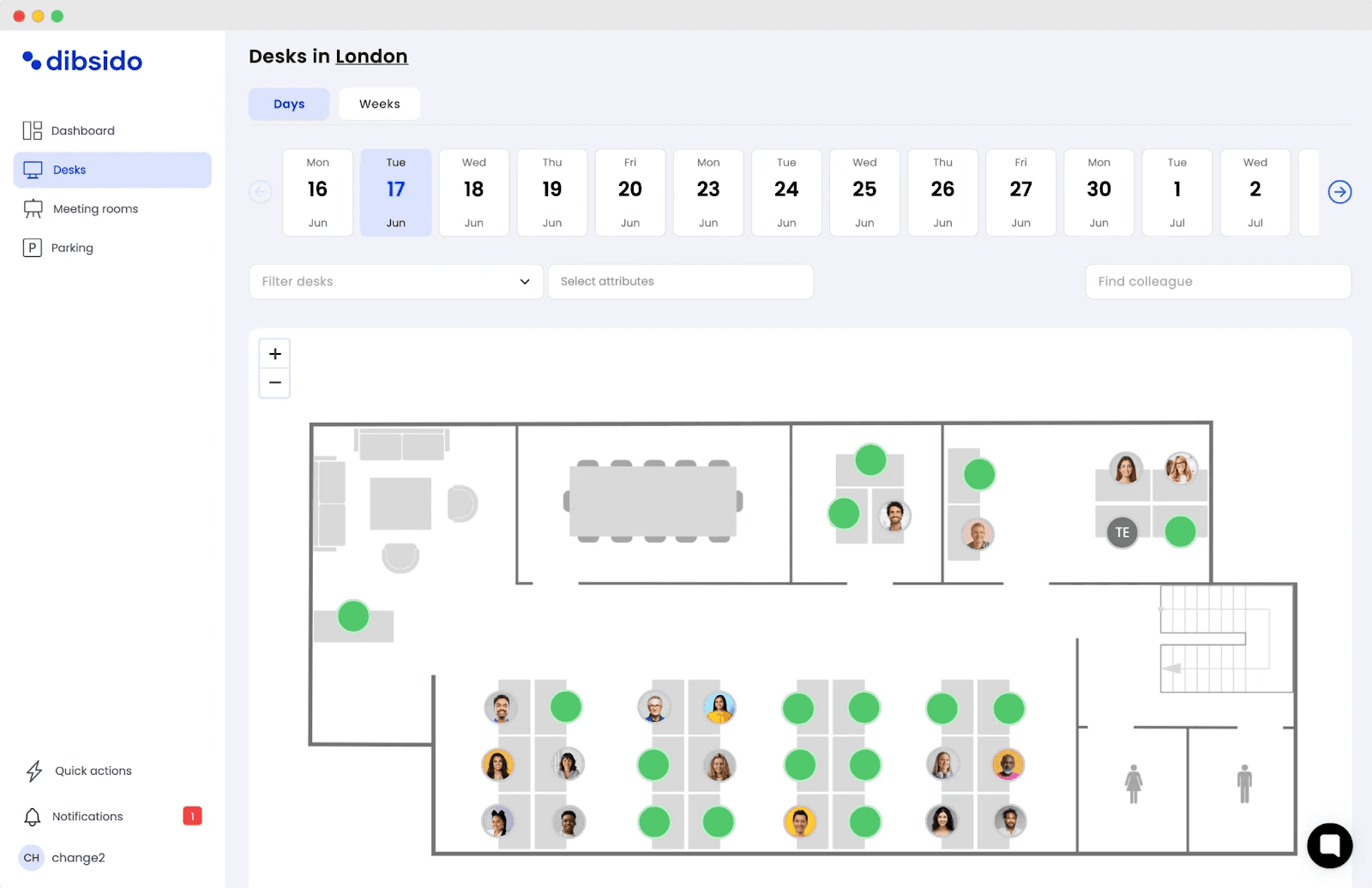
Fig. 3: Example of a desk booking interface in Dibsido.
You can run traditional hot desking with relatively little technology: define the shared desks, communicate the policy, provide appropriate equipment and storage, and let people use available spaces.
Hoteling normally requires a professional software, desk reservation system and therefore creates additional setup and governance. Somebody has to maintain desk inventory and floor plans, determine booking windows, manage exceptions, decide what happens after a no-show, and help employees when reservations fail.
However, today’s desk booking software market offers plenty of options that add little to no friction to day-to-day operations. Employees can book shared resources not only through web and mobile apps, but also directly from collaboration tools such as Slack or Microsoft Teams.
Cost doesn’t necessarily have to be a barrier, either. There are free desk booking software tools on the market, giving teams the flexibility to choose a solution that best fits their needs.
Ultimately, software is just one part of the cost equation. Both hot desking and hoteling can support shared-desk strategies that reduce the need for one permanent workstation per hybrid employee. The actual financial outcome depends on real estate decisions, software costs, administration, and utilization.
Choose based on operational complexity, not an arbitrary headcount.
Hot Desking vs Hoteling: Which Is Better for Your Office?
Neither model is universally better. A better question is: “Which problem are you trying to solve?”
Choose hot desking when…
Hot desking is a strong fit when office attendance is genuinely spontaneous, peak demand leaves comfortable spare capacity, employees do not need specific desks or equipment, and teams can collaborate without guaranteeing adjacent seating.
It also makes sense when the operational cost of introducing a reservation workflow would be greater than the problem it solves.
A useful signal is that employees already come and go informally and nobody is regularly asking, “Will I have somewhere suitable to sit?” In that environment, adding a mandatory booking step may create administration without adding much value.
Choose hot desking when the office has enough slack that spontaneity is an asset rather than a capacity risk. (To learn more, see our hot desking best practices and our guide on how to avoid employee pushback during the process.)
Choose hoteling when…
Hoteling becomes attractive when employees need certainty before commuting, busy-day capacity is tight, teams need to coordinate where they sit, employees require particular workspace attributes, or multiple offices and floors make availability difficult to understand.
It is also the stronger model when facilities or real-estate teams need structured information about workspace demand.
The most useful signal is not company size. It is a coordination cost.
Use both when…
You do not have to make every desk follow the same rule.
A blended workplace can keep bookable hoteling zones where certainty matters, team neighborhoods, specialist workstations or busy collaboration areas, while maintaining hot-desk zones for employees who need somewhere to work at short notice.
Hot Desking or Hoteling? In Practice, It’s Usually Both.
Hot desking and hoteling are often presented as two distinct models. In reality, modern workplaces tend to blend the two.
The basic distinction is still useful. Hot desking says: come in and use what’s available. Hoteling says: reserve what you need before you arrive. But flexible workplaces rarely need to apply one rule to every desk, every employee, and every situation.
That distinction is becoming even less rigid because vendors providing desk-sharing systems usually support both behaviors within the same platform. Employees may be able to reserve a desk days in advance, make a same-day booking, or claim an available workspace when they arrive. Depending on the vendor, all of these may even be described as hot desking, which helps explain why the terminology is not always consistent.
The same office can also mix the models intentionally. High-demand workstations and team neighborhoods might be bookable in advance, while other areas remain available for spontaneous use.
So the more useful question isn’t “hot desking or hoteling?” It’s “where do we need certainty, and where can we keep things flexible?”
If you want to move from theory to practice, try Dibsido for free and explore both hot desking and hoteling firsthand.
FAQ
What is the main difference between hot desking and hoteling?
The main difference is reservation. Traditional hot desking lets employees use any suitable workspace that is available when they arrive. Hoteling lets them reserve a desk or workspace before they need it. Both remove permanent desk ownership, but hoteling adds more predictability and planning.
What is hot desking?
Hot desking is a flexible office-seating model in which employees do not have permanently assigned desks. Instead, they use an available workstation when they come into the office. Under the traditional definition, desks are claimed on a first-come, first-served basis rather than reserved ahead of time.
What is hoteling in an office?
Office hoteling is a shared-workspace system in which employees reserve desks, workstations or other workspaces for a particular date or period. Employees do not permanently own the workspace; after the reservation ends, it returns to the shared pool and another employee can use it.
Is desk hoteling the same as office hoteling?
Usually, yes. Desk hoteling refers specifically to reserving desks or workstations, while office hoteling can be used more broadly for reservable workplace resources such as desks, offices or other spaces. In everyday workplace-management usage, the terms are often treated as near-synonyms.
Is hot desking the same as desk sharing?
Not exactly. Desk sharing is the broader category in which multiple employees use the same desks at different times. Hot desking is one way to implement desk sharing, typically without advance reservations. Hoteling is another, using reservations.
Does hot desking require booking software?
Traditional hot desking does not require advance booking software because employees simply use an available desk. However, organizations may still use technology to display availability, measure occupancy or help employees find colleagues. Some vendors also use “hot desking” more broadly for same-day or on-demand bookings, so terminology varies.
What are the advantages and disadvantages of hot desking?
Hot desking can be simple, spontaneous and efficient when office demand is flexible. Its disadvantages are lower certainty, competition for preferred workspaces, difficulty coordinating team seating and limited personalization. The quality and variety of available workspaces can strongly influence whether an unassigned environment works well.
What are the advantages and disadvantages of hoteling?
Hoteling provides greater certainty, supports planned team seating and generates reservation data. Its disadvantages are additional setup, dependence on booking processes and potential no-shows or “ghost reservations.” It works best when booking rules are easy to understand and unused reservations can be returned to availability.
Which is better for a hybrid office: hot desking or hoteling?
Neither is automatically better. Hot desking suits environments where attendance is spontaneous and capacity is comfortably available. Hoteling is more useful when employees need guaranteed workspaces, teams need to coordinate seating, or workplace teams need reservation information for planning. Many hybrid offices can benefit from using both models in different zones.
Can you combine hot desking and hoteling?
Yes. An office can make some areas reservable while leaving others available on a first-come basis. For example, team neighborhoods and specialist desks can use hoteling while general flex areas operate as hot-desking zones.
Our platform is designed to empower businesses of all sizes to work smarter and achieve their goals with confidence.