Most desk booking software implementations don’t fail during setup. They fail a few weeks later, when people quietly stop using the tool.
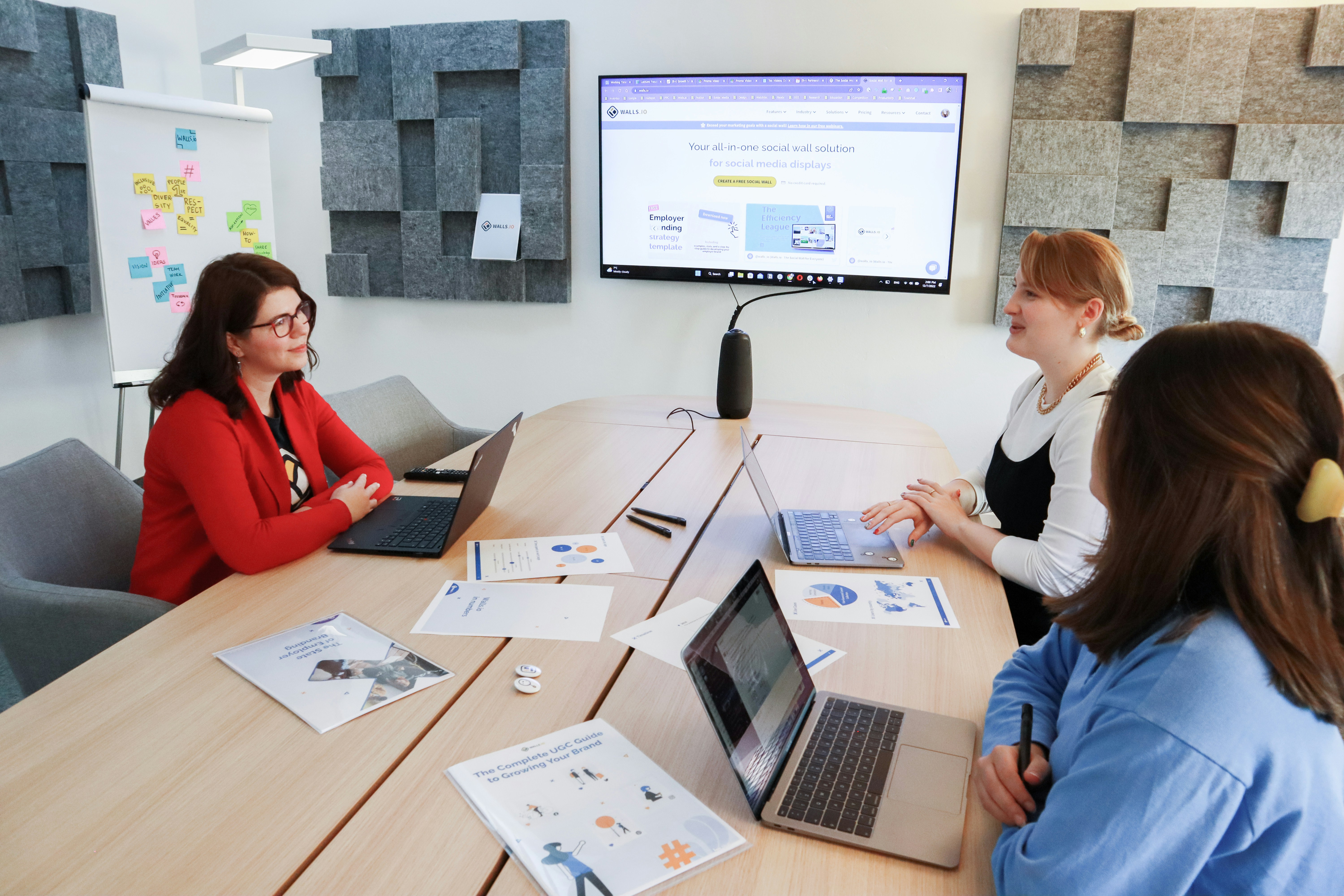
On paper, this shouldn’t happen. If you look at it purely from a technical perspective, desk booking isn’t one of the toughest tools to roll out. Most solutions today are SaaS. No infrastructure, no complicated deployment, no vendor-led training or lengthy certifications required to use the product.
In practice, implementation of the desk booking software is rarely about the tool itself. It’s about:
how it’s introduced,
how people react to it,
whether it fits into how the office already works.
And that’s exactly where things tend to get messy.
Why “Simple” Doesn’t Mean Easy
There’s a common assumption that if something is easy to deploy, it will be easy to adopt. Desk booking proves that wrong.
Every desk booking software vendor today claims it’s easy to get started with their product. And it is true, the technical barrier is low. But the behavioral barrier isn’t. You’re asking people to change a small, everyday habit, how they plan their time in the office. That sounds trivial, but it touches routine, comfort, and even social dynamics in the office.
If that change isn’t handled carefully, even a well-designed tool starts to feel like friction.
What’s interesting is that when desk booking fails, it doesn’t fail dramatically. There’s no big rejection, no clear signal that something went wrong. Instead, it fades into the background. People stop using it. They fall back to old habits. The system stays there, technically “implemented,” but practically irrelevant.
That’s the quiet failure mode.
How Implementation Actually Unfolds Inside Companies
From the outside, it might look like a structured process. In reality, it’s often quite organic, and a bit chaotic.
It usually starts with a trigger rather than a plan. HR notices that office attendance is inconsistent due to hybrid work. Office managers hear complaints about desk availability. Leadership starts talking about improving hybrid work efficiency and lowering costs on real estate. Somewhere in that mix, the idea of desk booking software comes up.
Then comes the typical request: someone from HR reaches out to IT and asks them to ‘find a tool,’ or HR or Operations starts looking for one directly.
From there, responsibility becomes slightly blurred. Sometimes IT takes the lead. Sometimes HR drives it. Sometimes both are involved, but without a clear owner.
A few tools get shortlisted. One is chosen for testing. A basic setup is created, often quickly, just to “see how it works.” A simple floor plan is uploaded, desks are defined, and a small group of users is invited to try it.
Those first users are expected to explore the tool and provide feedback. But in many cases, they don’t have enough context. They’re not sure what they’re supposed to evaluate. They might open the app once, book a desk out of curiosity, and then forget about it.
Or they ignore it altogether.
Even more importantly, how they talk about the tool matters. If their takeaway is unclear, ‘it’s some booking thing, not sure why we need it,’ that message spreads. And once that perception settles in, it’s surprisingly hard to reverse.

The Hidden Risk in Early Testing
Teams often treat the pilot phase as a formality. A checkbox before rollout.
But in reality, it’s one of the most sensitive parts of the entire implementation.
If the wrong people are involved, or if they’re left without guidance, the outcome is predictable. Low engagement, vague feedback, and weak internal advocacy.
It’s not about having more testers. It’s about having the right ones and setting them up properly.
People who are naturally curious, open to change, and willing to communicate their experience tend to shape much better outcomes. They ask questions, they notice friction points, and they’re more likely to explain the tool to others in a constructive way.
Without that, the pilot doesn’t generate insight. It generates noise.
When IT Steps In
Even with SaaS tools, IT usually becomes part of the process at some point.
Security reviews, data handling policies, integration checks. These are all valid and necessary steps. But they can also introduce delays and, more subtly, shift the focus away from user experience.
At this stage, the tool is often evaluated from a technical standpoint rather than a practical one. Does it meet requirements? Is it secure? Can it integrate with existing systems?
All important questions. But none of them guarantee that people will actually use it.
That gap between technical approval and real-world adoption is where many implementations lose momentum.
Deployment Is Not the Finish Line
Once the tool passes internal checks, it gets deployed. Access is granted, a company-wide message is sent, and from a project perspective, it looks complete.
But for employees, this is the first real interaction. They don’t need a detailed onboarding manual. They need a simple understanding of what’s changing and why.
This is why one of the most consistent patterns across successful implementations is clear, intentional communication.
Employees need to figure out where to log in, whether there’s a mobile app, how booking works, and when they’re expected to use it. More importantly, they need to understand why it exists in the first place.
When desk booking is positioned as a way to reduce uncertainty, help teams coordinate, and improve the overall office experience, it lands differently. It feels practical rather than procedural.
Effective communication is not only about instructions, it is about explanations.
And if that context is missing, the tool feels like an imposition. Something introduced from above without a clear benefit.
Removing uncertainty is what drives adoption.
The Real Problem: Perceived Friction
Most employee pushback isn’t about disagreement. It’s about perceived effort.
If booking a desk feels like an extra step, people will question it. If it requires a separate login, they’ll postpone it. If it’s not part of their daily workflow, they’ll forget it exists.
This is why one of the most effective ways to reduce pushback has nothing to do with features, and everything to do with integration.
When desk booking is connected to tools people already use, like Microsoft Teams, calendars or Slack, it stops feeling like a separate system.
That shift is critical.
Instead of asking employees to adopt something new, you’re meeting them where they already are. Especially with Microsoft Teams, which for many companies acts as the central hub for communication and coordination. Embedding desk booking there removes a significant psychological barrier.
If booking a desk means opening a new app, adoption drops.
If it happens within existing workflows, it feels like part of the workday.
Simplicity Wins, Especially Early On
There’s often a temptation to configure everything upfront. Set rules, define limits, create policies for every scenario.
But complexity is the fastest way to discourage adoption.
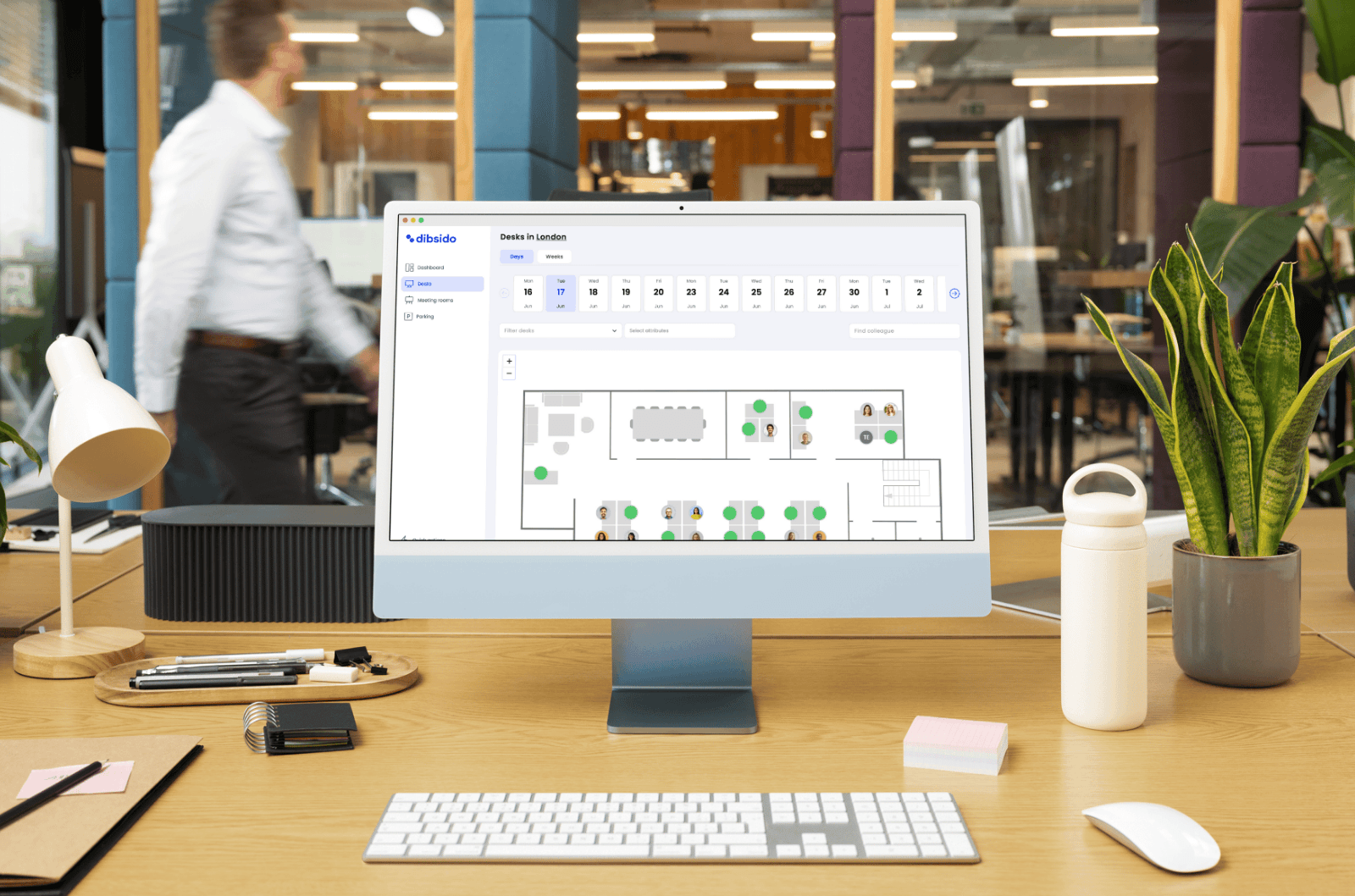
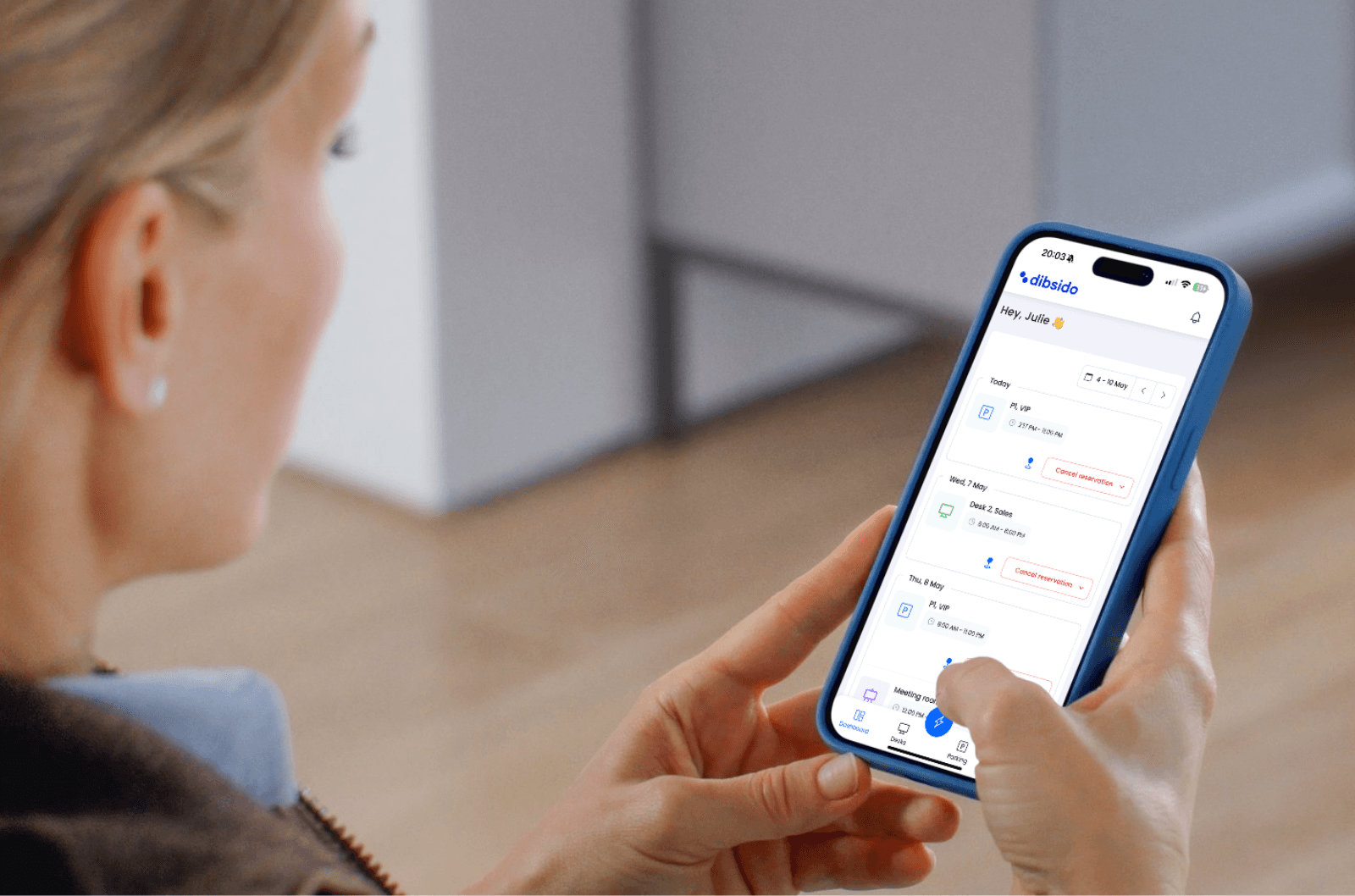
In the early stages, simplicity is far more valuable. People should be able to open the tool, see available desks (meeting room, parking spot or any other workplace resource), and book one in seconds. No confusion, no unnecessary steps.
Structure can come later, once usage patterns are clear. Starting simple makes it easier for people to build the habit.
How to Get Desk Booking Software Implementation Right
Implementing hot desking isn’t difficult in the way most IT projects are. The technology is straightforward, the setup is fast, and the barriers to entry are low.
What makes it challenging is everything around it.
How it’s introduced, who is involved early on, how it’s communicated, and whether it fits naturally into existing workflows.
The tool is rarely the reason desk booking fails. The rollout almost always is.
A few simple practices for successful desk booking software implementation can make a significant difference:
Start with a clear explanation of why desk booking is being introduced
Choose your initial test users carefully and guide them through the process
Keep the setup simple in the early stages and avoid overengineering
Ensure the tool integrates into existing platforms like Microsoft Teams or Slack seamlessly to reduce friction
Provide a clear onboarding experience with practical instructions
Treat rollout as a communication effort, not just a technical step
These are the factors that determine whether the system becomes part of everyday office life, or something people quietly ignore.
If you get those right, pushback rarely becomes an issue.
Not because people are forced to use the tool, but because it simply makes sense to them.

Julie Slovackova
Customer Success Specialist
Our platform is designed to empower businesses of all sizes to work smarter and achieve their goals with confidence.