
Still, not every company searching for desk booking software is looking for a full workplace operations platform.
A lot of smaller and mid-sized businesses are trying to solve a much more straightforward issue: employees need a simple way to reserve desks, check who is coming into the office, and coordinate in-person workdays without relying on spreadsheets, chat threads, or manual planning.
Once that need is met, many of the broader workplace modules become secondary.
This is usually the point where Kadence enters the comparison phase rather than becoming the immediate final choice.
It is not necessarily that something is wrong with Kadence. It is that some companies begin to wonder whether they need that much software in the first place.
Questions around implementation time, monthly cost, employee onboarding, and long-term adoption naturally follow.
And that is why businesses start looking for Kadence alternatives.
Please note that this guide to Kadence alternatives was updated in April 2026 to help you make an informed decision.
Vendor | SMB Friendliness | G2 average rating | Pricing | How to get started |
Kadence | Strong | 4.5 | Quote-based pricing | Guided demo tour |
Dibsido | Excellent | 4.9 | User-based ($1.9 per user/month) or resource based ($3 per desk/month) | 14-day free trial |
Skedda | Good | 4.8 | Resource-based, from $99 per space/month | Talk to sales |
Archie | Strong | 4.9 | Resource-based, from $2.8 per desk/month | Guided demo |
Joan | Moderate | 4.5 | Starts at $49 per month | 30-day free trial |
Officely | Excellent | 4.6 | User-based, from $2.5 per user/month | 7-day free trial |
Envoy Workplace | Partial | 4.4 | Resource-based, from $60 per bookable resource/year | 14-day free trial |
Robin | Limited | 4.4 | Quote-based pricing | Public product tour |
Tab 1: Quick comparison of the Kadence alternatives 2026 (data based on available vendor sources and G2 rankings, as of April 2026)
What Is Kadence?
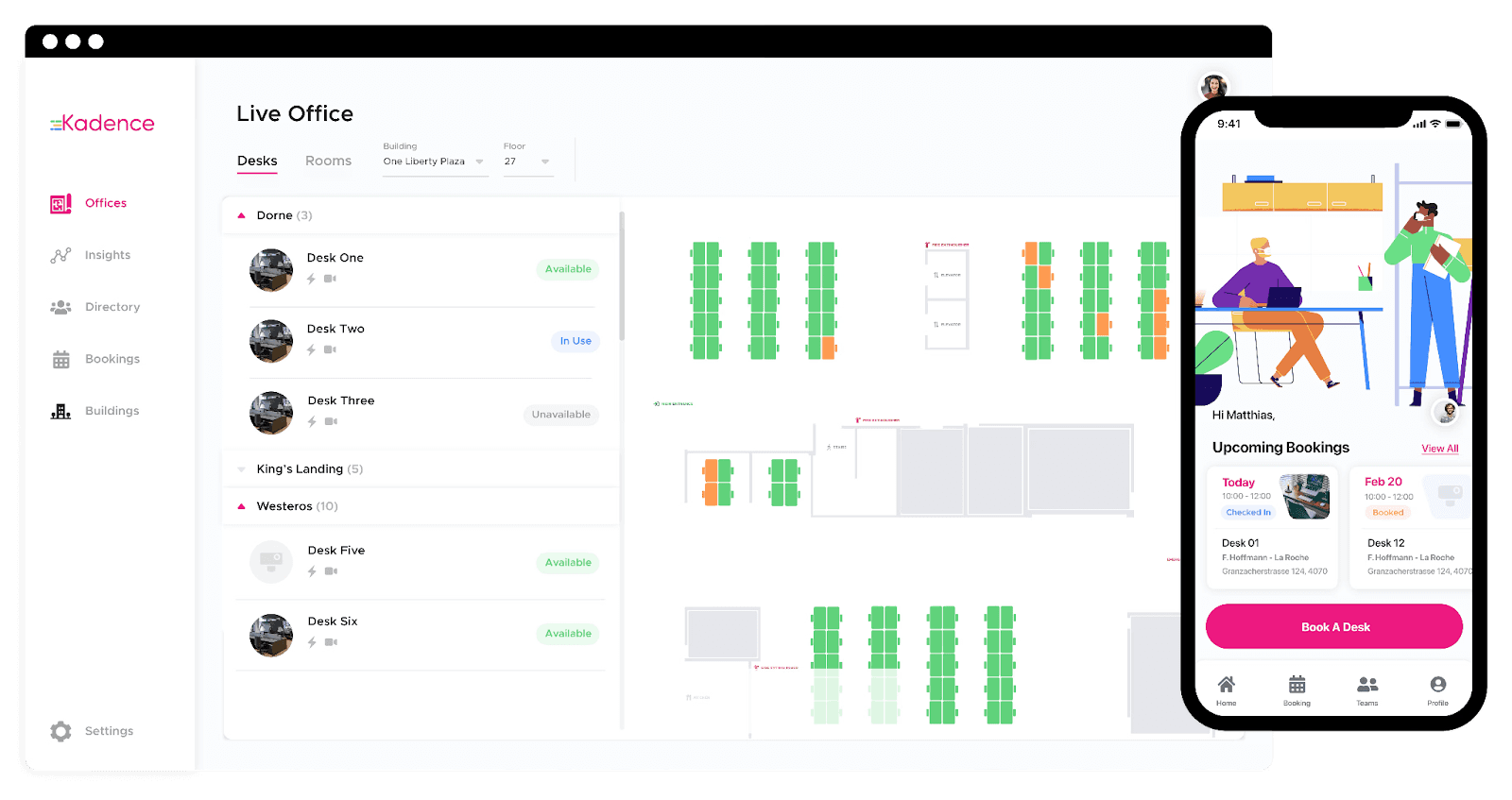
Kadence is a workplace management platform built for companies trying to bring more structure into hybrid work.
This broader workplace focus is reflected in Kadence’s WorkOps plan, which combines desk booking, meeting room booking, visitor management, workplace analytics, space management, and employee engagement into one system. A second plan, SpaceOps, adds further AI-backed space management capabilities and deeper office insights.
That breadth is one of Kadence’s biggest advantages. Rather than solving a single workplace challenge, the platform is built to act as an umbrella layer for workplace operations, supported by AI-driven functionality. This makes it particularly appealing for organizations with more complex coordination needs, and dedicated workplace teams.
The same positioning can also be seen in user feedback on the G2 platform, where approximately 94% of Kadence reviewers come from small businesses and the mid-market segment. Users most often highlight Kadence’s space management features, ease of use, integration capabilities, and responsive customer support.
Kadence overview:
Best fit: Small and Mid-sized organizations
Pricing model: No public pricing available (according to its website)
Free version: No permanent free version
Mobile availability: iOS and Android
Why users choose Kadence:
Straightforward UI that makes desk booking easy for users.
Comprehensive platform with built-in AI capabilities (Smart Suggestions) and a wide range of workplace management features included.
Broad integration capabilities with common collaboration tools and offers API access for deeper customization and automation.
Considerations:
Pricing is not public, and additional setup costs may apply, such as fees for uploading floor plans.
Desk booking is only available as part of the full platform.
Due to its broader feature set, administrators and advanced users may need more time to fully configure and adopt the platform.
Why Companies Start Looking for a Kadence Alternative
In many cases, companies do not start searching for a Kadence alternative because they dislike the platform. They start searching because, after reviewing the product, they realize their actual requirements may be narrower.
Kadence is built as a workplace experience platform, not just a desk booking app. That broader positioning makes sense for organizations that actively need occupancy reporting, visitor management, or deeper workplace coordination.
But for a large portion of SMB hybrid offices, the wish list is often much shorter.
They need employees to reserve desks, see who is planning to come into the office, coordinate in-person days, and occasionally book a meeting room. Once those basics are covered, the conversation often shifts from feature breadth to practical considerations such as rollout effort, employee adoption, and pricing transparency.
For some smaller companies, Kadence’s less publicly transparent pricing and enterprise-style sales process may also feel like a heavier buying journey than expected. This is especially noticeable in a market where many Kadence competitors publish straightforward pricing online and allow teams to get started through quick self-onboarding without lengthy demos or sales calls.
Is There a Free Kadence Alternative?
Yes, and one of the strongest options currently available is Dibsido.
Unlike many vendors that lock meaningful functionality behind demos or paid tiers, Dibsido offers a genuinely usable free version for teams that want to launch desk booking quickly or test adoption without financial commitment.
The free tier is free forever and includes the core capabilities most hybrid offices actually need:
interactive office floor plan
desk reservations
employee presence overview
mobile-friendly access
SSO
integrations with collaboration tools (MS Teams, Slack)
There are some limitations as well. The free plan is limited to a maximum of 10 users. You can book as many desks or other resources as you like, but only one meeting room and five parking spots. Some features, such as calendar synchronization with Google or Microsoft Microsoft Entra ID support, are only available on paid plans.
However, Dibsido remains a strong free alternative to Kadence and may be especially attractive for companies in the early stages of hybrid office coordination.
Top 7 Kadence Alternatives for 2026
Here are the best Kadence alternatives worth evaluating if your company needs desk booking software.
Kadence vs. Dibsido

For small and mid-sized companies, Dibsido feels like one of the more natural Kadence alternatives because it starts from a much simpler assumption: desk booking software should not feel heavy.
The platform is designed for fast, self-service onboarding, allowing teams to roll it out in minutes without lengthy setup, demos, or sales involvement. It focuses on the practical things hybrid offices deal with every week: reserving desks, booking rooms, checking office presence, and helping teams coordinate onsite days without unnecessary clicks.
It is also one of the few platforms that includes office parking management alongside desk booking, a wedge for hybrid offices managing both shared desks and limited parking spots.
That lighter approach usually translates into faster implementation and easier employee adoption, supported by native integration with collaboration tools, calendars, Slack, and Microsoft Teams.
A native Dibsido app for MS Teams is also available in the Marketplace.
This removes one of the biggest friction points in workplace software: asking employees to actively open yet another standalone app.
Besides the core features, Dibsido also offers useful advanced capabilities such as booking rules, office check-ins, and workspace utilization and analytics tools.
For businesses that look at Kadence and think, "this may be more than we need," Dibsido is often one of the first platforms worth trialing.
Kadence vs. Skedda

Skedda has long been one of the most recognized names in desk booking and workplace scheduling, particularly among companies that want more control over booking rules and space management.
Its strengths lie in configurable booking permissions, interactive floor plans, automated reservation settings, and the ability to manage a variety of shared resources beyond desks. For offices with more structured booking policies, that level of control can be valuable.
Compared to Kadence, Skedda feels slightly more reservation-centric and less focused on broader workplace analytics. Compared to lighter SMB tools, however, it can still require a bit more configuration upfront (see our comparison of Skedda alternatives to learn more).
Skedda is usually best suited for teams that want desk booking depth and policy control, but not necessarily a full workplace experience platform.
Kadence vs. Archie
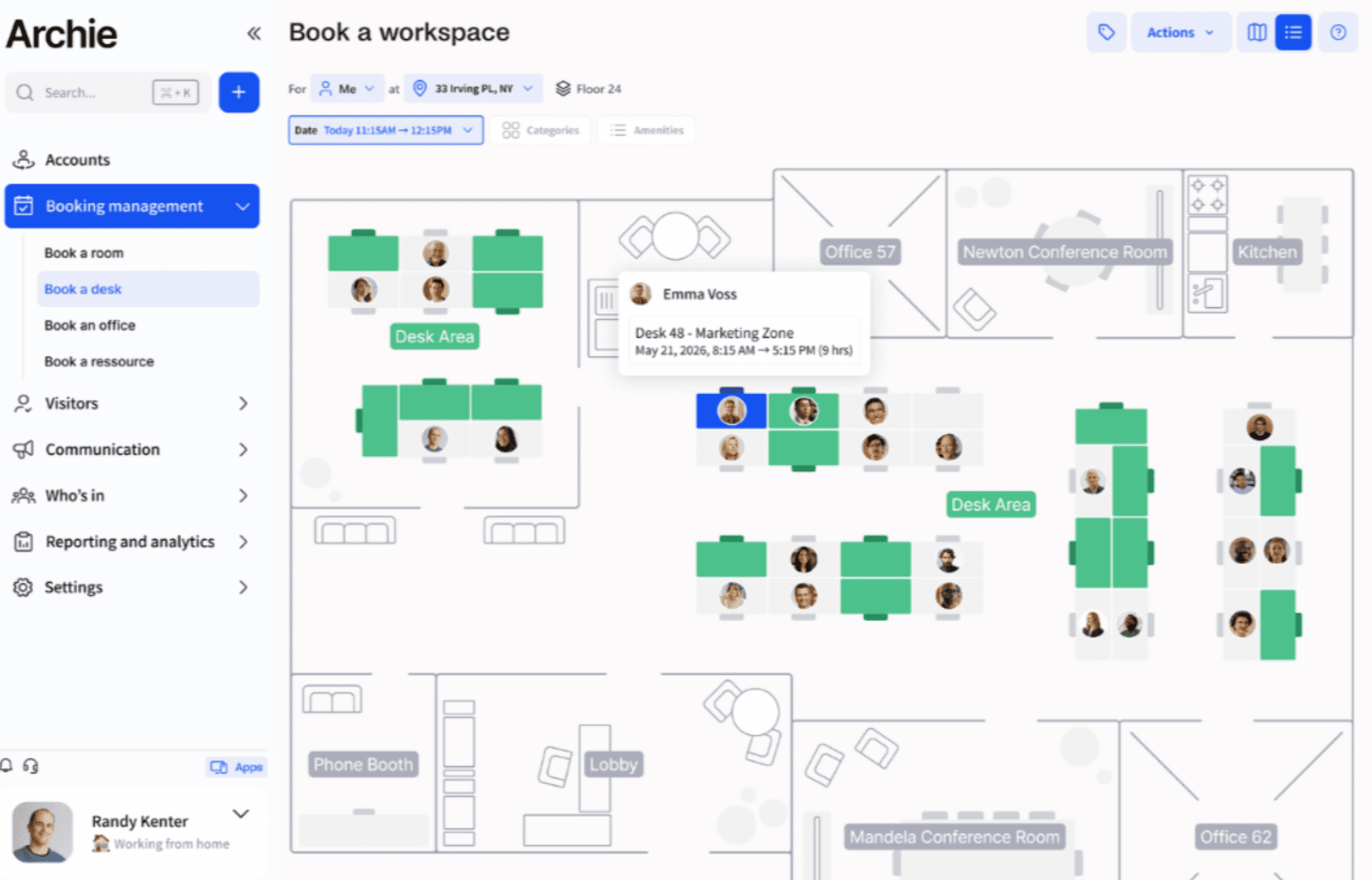
Archie takes a broader workplace management approach, similar in some respects to Kadence, but with a particularly polished user interface and strong emphasis on hybrid office experience.
The platform combines desk booking, meeting room reservations, visitor management, office attendance coordination, and analytics in one environment. That makes it attractive for growing organizations that want more than basic desk reservations but still care about employee-facing usability.
Contrary to Kadence’s all-in-one plan offering, Archie offers module-based subscriptions for desk booking, meeting room scheduling, visitor management, and specialized coworking management. It also provides public, resource-based pricing.
Archie often appeals to companies looking for a modern-looking workplace platform with coworking-style flexibility.
Kadence vs. Joan

Joan is well known for combining workplace booking software with smart meeting room display hardware, but its software offering also includes desk booking, room reservations, visitor management, and office coordination features.
This makes Joan an interesting alternative for companies that want a stronger meeting-room-first experience or plan to invest in physical workplace hardware alongside software.
If the primary need is simply easy desk booking for a hybrid team, Joan may offer a slightly wider workplace ecosystem than necessary, but it remains a credible option for companies wanting both digital and physical workplace management tools.
Kadence vs. Officely

Officely has grown quickly thanks to one very practical idea: make desk booking happen inside collaboration platforms employees already use.
Its Slack-first and Microsoft Teams friendly approach removes much of the friction that comes with some standalone workplace apps. Employees can coordinate office attendance, reserve desks, and see where colleagues are working without switching into a separate workplace management environment.
That simplicity makes Officely a strong Kadence alternative for companies prioritizing adoption over advanced workplace analytics.
Kadence vs. Envoy
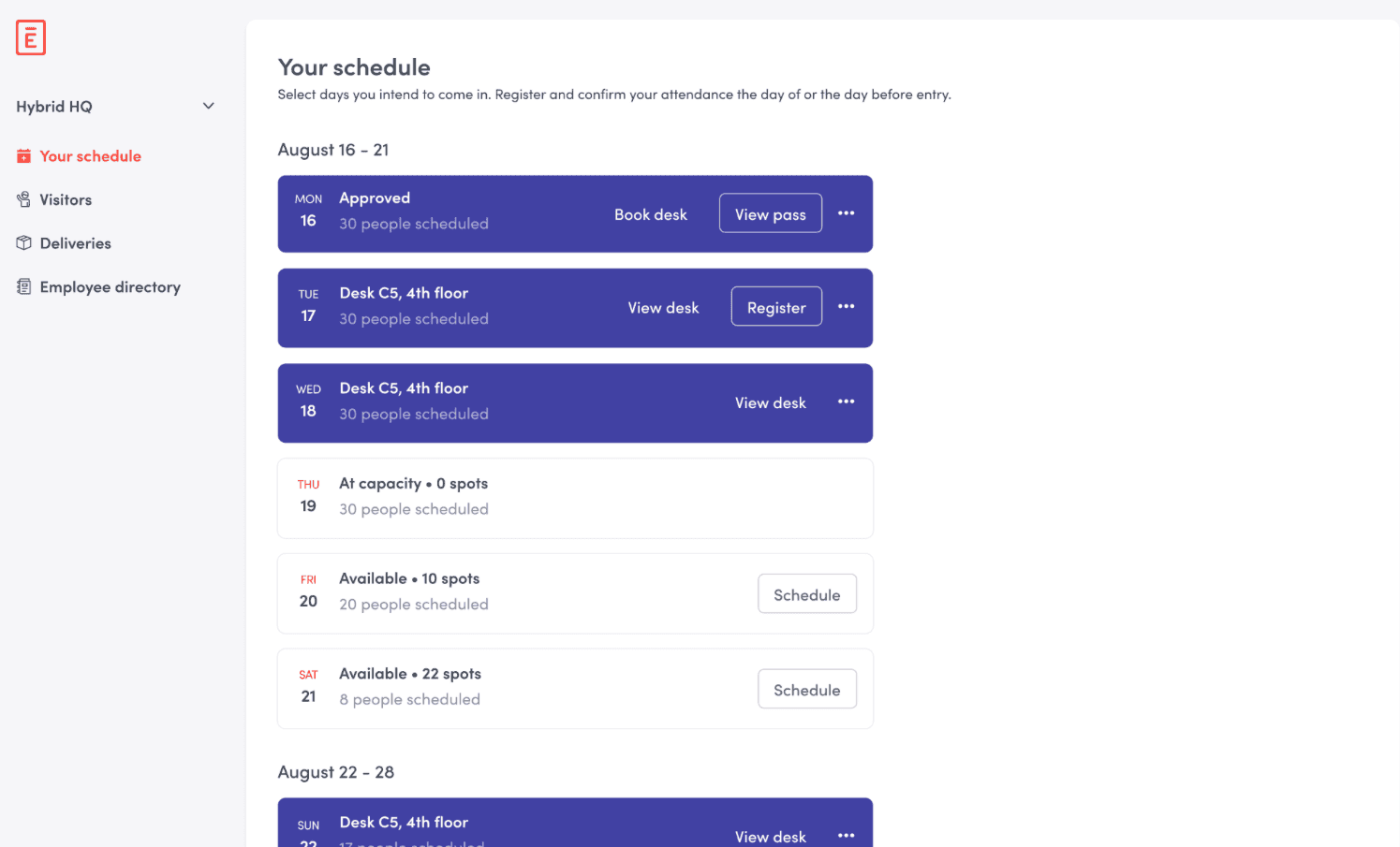
Envoy is another established workplace software vendor that often appears in the same buying conversation as Kadence.
Unlike Kadence’s more bundled workplace approach, Envoy offers these capabilities through modular products, allowing companies to build their setup around specific office needs, such as reservations, visitor management, emergency notifications, and deliveries
Its Reservations module starts at $60 per bookable resource per year when billed annually, which can work well for organizations managing a larger number of desks and shared spaces. Envoy also has a strong market presence, with over 16,000 workplaces using the platform worldwide and particularly strong adoption among mid-sized businesses and enterprises.
At the same time, Envoy still follows a relatively enterprise-oriented buying and onboarding process, often involving demos, setup configuration, and policy customization. For companies looking for a broader workplace ecosystem, it remains a credible Kadence competitor. But for smaller teams with simple hot desking needs, both platforms may still feel more involved than necessary.
Kadence vs. Robin Powered

Like Kadence, Robin goes beyond basic desk booking. What started as a meeting room scheduling tool has evolved into a broader hybrid workplace platform covering desk and room reservations, visitor management, workplace analytics, and employee engagement features such as feedback collection and company announcements.
Robin is particularly designed for larger hybrid environments. It supports integrations with workplace hardware like room displays, kiosks, and digital signage, making it a strong fit for organizations managing multiple floors or office locations.
At the same time, Robin shares some similarities with Kadence in terms of buying process and rollout. Pricing is quote-based, free trial access usually requires contact with sales, and implementation can take time depending on office complexity and integration needs.
For mid-sized organizations and enterprises looking for a scalable workplace management platform, Robin is a credible Kadence competitor. But for smaller teams that mainly need simple desk booking and office coordination, both platforms may feel more enterprise-focused than necessary.
How to Choose the Right Kadence Alternative
Kadence remains a capable workplace management platform, especially for organizations looking for an all-in-one hybrid work environment.
At the same time, many small and mid-sized businesses searching for Kadence alternatives are solving a narrower problem: they need reliable desk booking without the overhead.
That is why evaluating alternatives matters.
Choosing the best Kadence alternative depends on what your company actually expects from workplace software. If you are looking for a broad workplace management layer with analytics, visitor workflows, occupancy planning, and deeper office insights, Kadence and Archie remain strong contenders.
If your office needs more configurable booking rules and shared space automation, Skedda is often worth serious consideration.
But if your priority is much more practical, getting employees to reserve desks, coordinate office attendance, and use the system consistently without friction, lighter desk booking tools usually perform better in the long run.
If your team is currently comparing hybrid workplace tools, the smartest next step is not asking which platform has the most features.
It is asking which one your office will realistically use every day.
For many SMB hybrid teams, that answer often points toward simpler, employee-friendly alternatives like Dibsido, which are designed to fit naturally into your existing workflows and minimize employee pushback.
If you are currently evaluating Kadence alternatives, starting with Dibsido’s full-featured free desk booking tier is often the fastest way to see what your team actually needs.
Common Questions When Comparing Kadence Alternatives
Is there a free alternative to Kadence?
Yes. Dibsido offers one of the most usable free desk booking plans for small hybrid teams. It allows companies to test desk reservations, room booking, and office coordination without immediate subscription pressure.
Is Kadence good for small businesses?
Kadence can work for small businesses, but many smaller teams may find its broader workplace management approach more than they actually need. Companies looking mainly for desk booking often compare it with lighter and faster-to-launch tools.
What is the cheapest Kadence alternative?
Among the tools compared here, Dibsido and Officely are typically considered the more budget-conscious options for SMB hybrid offices, especially when implementation simplicity is part of the buying decision.
What should small teams look for in desk booking software?
Small and mid-sized companies should usually prioritize ease of use, fast onboarding, collaboration tool integrations, mobile accessibility, and affordable pricing over enterprise workplace analytics.
Our platform is designed to empower businesses of all sizes to work smarter and achieve their goals with confidence.