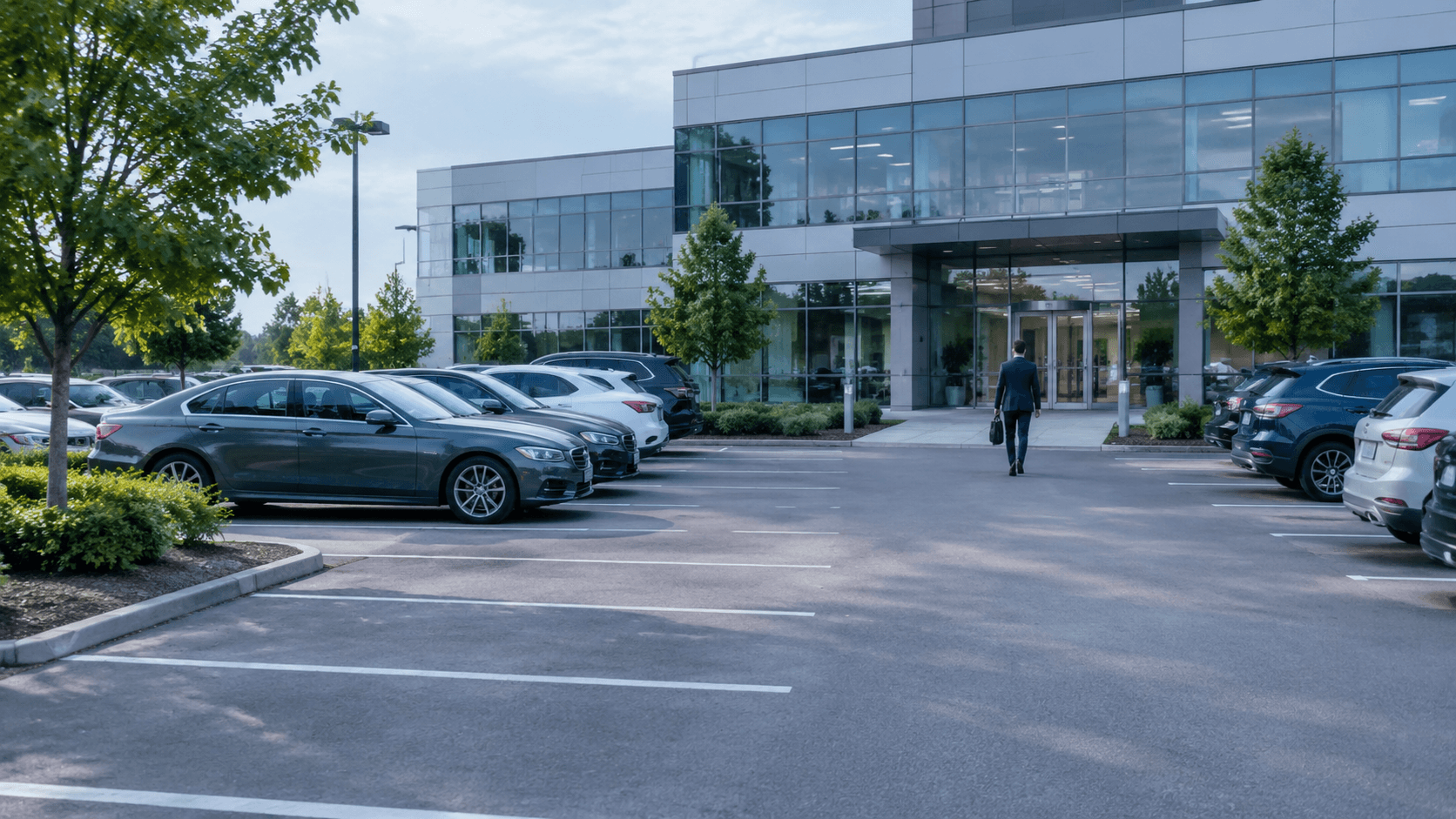
Most offices have more people than parking spaces, and a shared spreadsheet or a first-come free-for-all quietly turns that shortage into a daily source of friction. Here is how to manage limited workplace parking without the morning scramble.

A workplace parking management system lets employees reserve a spot in advance, shows who has a space on any given day, and surfaces which spots actually get used.
When there are more staff than spaces, the fix is not more spaces, it is a fair allocation method: advance booking, rotation or credits, and clear priority rules.
Spreadsheets and first-come parking break down because they have no visibility, no fairness mechanism, and no record of who booked but never showed.
Software tracks no-shows and unused spots so someone can act on them, but the rules and the enforcement stay with a human.
Start small: put the spaces you have into one bookable pool, set the rules, and use the utilisation data to decide whether you even have a shortage.
Most offices run on a quiet contradiction. There are far more people than parking spaces, and yet the spaces are managed as if there were plenty: a few permanently assigned bays, a spreadsheet nobody trusts, and an unspoken rule that whoever arrives first wins. It works right up until it does not, and then it becomes one of the most reliable sources of workplace friction there is.
If you have twenty spaces and a hundred people who sometimes drive in, the problem is not really a shortage of tarmac. It is a lack of a system. This guide walks through how to manage workplace parking when demand outstrips supply, how to keep it fair, and what a workplace parking management system actually does once you put one in.
Why spreadsheets and first-come parking break down
A shared spreadsheet feels like control, but it has three holes that widen over time.
The first is visibility. Nobody can see, at a glance, whether a space is free for next Tuesday, so people either guess or double-book. The second is fairness. Without a mechanism, the same early risers claim the same spots every day, and everyone else notices. The third is the no-show problem: someone reserves a space, their plans change, and the space sits empty while a colleague circles the block. A spreadsheet has no way to catch that, and no record that it happened.
First-come, first-served has the same holes with an added cost. It rewards commute length and luck rather than need, and it pushes the stress onto the moments when your team can least absorb it, right before the working day starts.
What a workplace parking management system does
A workplace parking management system turns the car park into a bookable resource, the same way a desk booking tool turns a floor of desks into something people reserve rather than fight over. In practice that means three things.
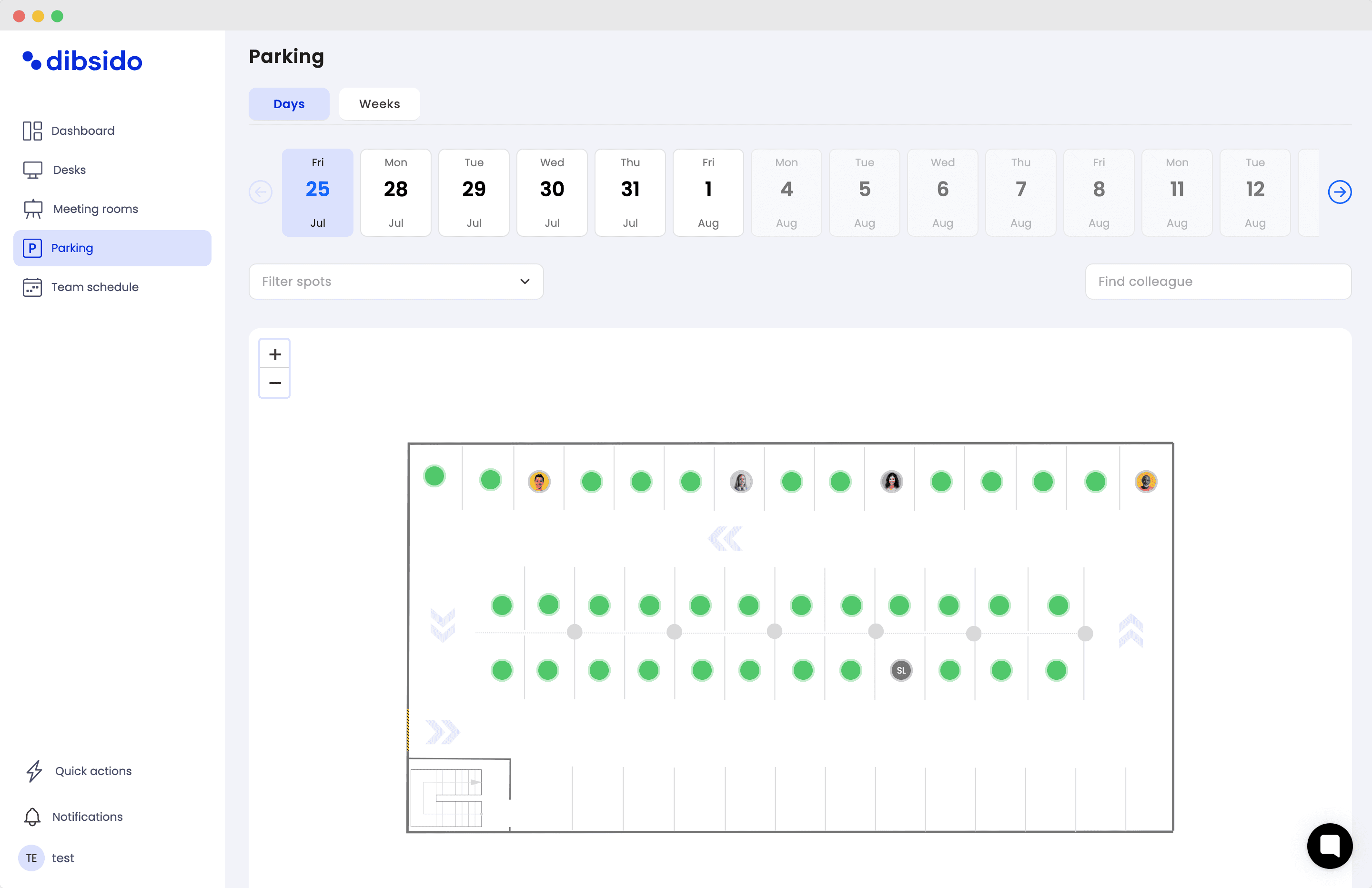
Employees reserve a spot for the specific days they drive in, usually from a phone, and cancel when plans change so the space returns to the pool. Everyone can see real-time availability, so there is no guessing and no double-booking. And the office manager gets a record of what happened: who booked, whether they showed up, and how heavily each spot is actually used.
That last point matters more than it first appears. A lot of "we do not have enough parking" turns out, once you can see the data, to be "we have enough parking but no way to share it." The software surfaces that reality so a human can act on it.
How to allocate limited spaces fairly
Advance booking solves the visibility problem, but on its own it can recreate the old unfairness, since the keenest bookers simply claim everything the moment slots open. Fair workplace parking needs a mechanism layered on top. Three approaches work well, and most offices combine them.
Rotation shares the pool on a schedule so access moves around the team rather than settling on the same names. A credit or points budget gives each person a monthly allowance to spend on the days they most need a spot, which naturally rations demand without a manager adjudicating every request. Priority tiers reserve a portion of spaces for genuine needs, such as accessibility, shift patterns, or a long car commute with no public transport option.
Whichever you choose, write it down. A short, published set of rules is what makes the method feel fair rather than arbitrary, and it saves you from relitigating every edge case in person. If you want a starting point, our fair parking allocation policy framework lays out a template you can adapt, and there is a practical walkthrough of the trade-offs in our guide on how to make company parking fair.
Rolling it out without a big project
You do not need a car-park renovation to fix this. The rollout is mostly organisational.
Start by pooling the spaces you actually control into one bookable set, including any bays that were informally assigned but rarely used. Set the allocation rules before you switch anything on, so the first week runs on your terms rather than a land grab. Mark the special spots, such as EV charging or accessible bays, so people can book the right type. Then let it run for a few weeks and read the utilisation data before you make any permanent decisions. More often than not, the data tells you the shortage is smaller than it felt.
For teams that also share desks or meeting rooms, it is worth handling all three in one place so employees book everything from a single app rather than three. Our guide to employee parking software covers what to look for in a dedicated tool, the wider parking management software guide compares the main options on features and pricing, and if you want a step-by-step rollout plan there is a detailed one in how to implement a shared parking booking system.
Where Dibsido fits
Dibsido is a workplace booking platform that handles desks, meeting rooms, and parking in one app, aimed at small to mid-sized hybrid offices. For parking specifically, employees book a spot for the days they drive in, see live availability, and check in from their phone. You can pin special spots such as EV charging or accessible bays on an interactive map, and the platform tracks no-shows and unused spaces so someone can follow up. The rules and the follow-up stay with a human: the software surfaces the facts, it does not automatically suspend anyone.
To be clear about the trade-offs: Dibsido does not sell parking hardware such as barriers or licence-plate cameras, and calendar sync sits on the paid plans rather than the free tier. If your requirement is a physical access-control system for a public garage, a workplace booking tool is the wrong category. If it is fair, visible, self-serve parking for your own team, it is the right one. Parking is included on the free plan for up to 10 users and 5 spots, and the all-in-one plan that bundles desks, rooms, and parking starts at 2.50 euro per user per month on annual billing.
You can try it free, book a demo, or see the parking booking product page for the full feature list.
Frequently asked questions
What is a workplace parking management system?
A workplace parking management system is software that turns your office car park into a bookable resource. Employees reserve a spot for the days they drive in, everyone can see which spaces are taken, and the office manager gets a record of who booked, who showed up, and how often each spot is actually used.
How do you manage office parking when there are more employees than spaces?
Stop treating every space as permanently assigned. Pool the spaces you have, let people book only on the days they need one, and set clear rules for how the pool is shared. Because hybrid teams are rarely all in on the same day, a shared pool usually covers far more people than the raw number of bays suggests.
How do you allocate limited parking spaces fairly?
Fair allocation combines advance booking with a mechanism that stops the same people claiming every spot. Common options are rotation, a credit or points budget per person, and priority tiers for genuine needs such as accessibility or a long commute. Write the rules down so the method is transparent, then let the booking system apply them.
Can employees book a parking spot in advance?
Yes. With a parking management app, employees reserve a spot from their phone for the days they plan to drive in, see availability in real time, and cancel when plans change so the space returns to the pool for someone else.
What does workplace parking management software cost?
Pricing is usually per user per month, and several tools including Dibsido have a free tier for small teams. Dibsido offers parking on its free plan for up to 10 users and 5 spots, and the all-in-one plan that adds desks and meeting rooms starts at 2.50 euro per user per month on annual billing.
Does a parking management system handle EV charging and accessible spots?
Good systems let you mark special spots on an interactive map, such as EV charging bays or accessible spaces, so employees can find and book the right type. The software flags and records usage, but a person still sets the rules for who those spots are reserved for and handles exceptions.
Our platform is designed to empower businesses of all sizes to work smarter and achieve their goals with confidence.