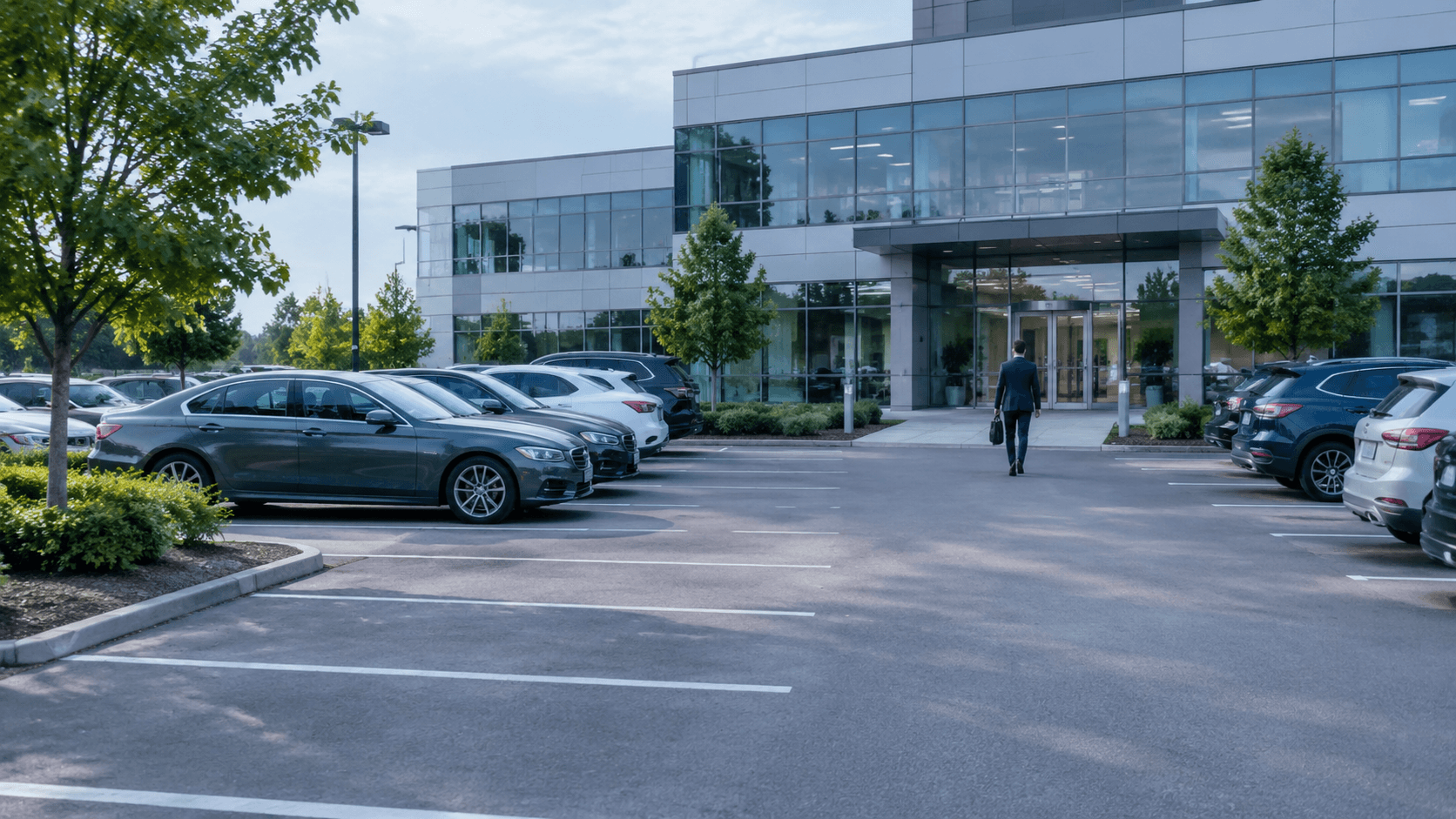
Most offices still hand out parking the way they did when everyone came in five days a week: one named spot per person, painted with a surname, kept for life. Then hybrid work arrived, attendance dropped to two or three days a week, and the math quietly broke. Half those reserved spots now sit empty on any given morning while colleagues without a spot circle the block or give up and stay home. This is the decision guide for the other model: shared, booked parking, where spots belong to the office instead of to individuals and people reserve the day they need. It covers the utilization case, the fairness question, when assigned spots still make sense, and how to make the switch without a mutiny.

Assigned parking was built for a five-day office. In a hybrid one, a spot tied to a named person is empty every day that person works from home, which is often half the week.
Shared parking gives the spots back to the whole office. People book the day they drive in, the spot returns to the pool when they do not, and the same lot serves far more of your staff.
The core argument is utilization, not cost cutting. You are not removing spots, you are stopping paid-for spots from sitting idle while people who need them cannot park.
Shared parking is usually fairer than assigned spots, because access follows genuine need on the day rather than seniority or who joined first.
Keep a small number of reserved spots where they are genuinely warranted: accessibility, visitors, and a few operational cases. Share the rest.
The switch is a change-management job, not a software job. Measure the waste, keep the exceptions, communicate the why, and pilot before you repaint the lot.
Most offices still hand out parking the way they did when everyone came in five days a week. One named spot per person, sometimes painted with a surname, kept more or less for life. It was a simple system for a simple pattern, and for decades it worked.
Then hybrid work arrived and the pattern changed underneath it. Attendance settled at two or three days a week for a lot of teams, but the parking allocation did not move. So now, on any given morning, a chunk of those reserved spots sit empty because the people they belong to are working from home, while colleagues who did drive in circle the lot, park on the street, or decide the commute is not worth it.
This is a decision guide for the alternative: shared, booked parking, where spots belong to the office rather than to individuals and people reserve the day they need one. It is not an argument for taking parking away. It is an argument for getting far more out of the exact same spots. We will walk through the utilization case, the fairness question, when assigned spots still earn their keep, and how to make the switch without a revolt.
The quiet math of assigned parking
Assigned parking has one fatal assumption baked into it: that the person it is assigned to is here. In a five-day office that assumption held almost every day. In a hybrid office it fails roughly as often as it holds.
Work it through. If your team averages three days a week in the office, then any single assigned spot is, on average, unused two days out of five. Drop to two days a week and the spot is empty more often than it is used. Multiply that across a whole lot and the result is a car park that is full on paper and half empty on the tarmac, at the same time as people who came in genuinely could not find a space. That is the worst of both worlds: the cost and footprint of a full lot with the usefulness of a small one.
The waste is invisible in an assigned system, which is why it survives. Nobody sees "spot 14 was empty again today" because spot 14 is Dana's, and whether Dana is in is nobody else's business. The emptiness never becomes a number, so it never becomes a decision. The first step in the case for shared parking is simply making that waste visible. If you are wrestling with the downstream symptom, not enough spaces for the people who show up, our guide to employee parking shortage solutions tackles that head on.
What shared or booked parking actually means
Shared parking is the same idea as hot desking, applied to the car park. The spots stop belonging to named individuals and start belonging to the office. Employees who are driving in that day reserve a spot in advance, for a full day, a half day, or a custom length, and the spot is theirs while the booking lasts. When the booking ends, or when someone does not book because they are not coming in, the spot goes straight back into the pool for someone else.
The effect on capacity is the whole point. A lot of 40 spots under a one-spot-per-person rule serves exactly 40 people, whether they show up or not. The same 40 spots run as a shared pool can serve a much larger population, because no single person is holding a spot on the days they are not there. You have not added a single square metre of tarmac. You have stopped paying for spots to sit idle.
The utilization case, in plain numbers
You do not have to take the argument on faith, and you should not. The strongest version of this case is your own utilization data.
Start by measuring, the same way you would for desks. For two or three typical weeks, compare the number of spots you have against the number actually occupied each day. In an assigned lot this is awkward, because officially every spot is taken. So count physically, or better, run a short pilot of booked parking on part of the lot and let the system record real occupancy for you.
Two numbers tell the story. The first is peak occupancy: on your busiest day, how many spots are genuinely in use at once. This is almost always lower than the total number of spots, and it is the real size of car park you need. The second is average occupancy across the week, which is usually far lower still. The gap between the number of spots you have and your true peak is the waste that assigned parking hides and shared parking recovers. Once you can put a figure on it, the conversation stops being about who owns which spot and starts being about how many more colleagues you could let park from the lot you already have.
Assigned vs shared: an honest comparison
Shared parking is not free of tradeoffs, and pretending otherwise loses the room. Here is the balanced version.
Assigned parking is predictable. Your spot is always there, you never think about it, and for the people who have one it feels like a perk. Its weakness is that predictability comes at the cost of utilization: the certainty for one person is paid for by the empty spot everyone else cannot use, and by the colleagues who never get a spot at all because the lot was carved up years ago.
Shared parking flips that. It trades a little individual certainty for a large gain in collective access. The person who used to have a guaranteed spot now books it, which is a small extra step and, on the busiest days, a small risk that the lot is full. In return, many more people can park across the week, and access reflects who is actually in rather than who was hired first. The extra step is where most of the resistance lives, so the job is to make booking genuinely effortless and to handle busy days fairly, which is what a waiting list is for.
Neither model is universally right. The question is what your lot is for: rewarding tenure, or getting as many of today's commuters parked as possible. For most hybrid offices, the second goal is the honest one.
Is shared parking fairer than assigned spots?
Usually, yes, though fairness is something you design rather than something the model hands you.
Assigned parking allocates by history. Spots tend to go to whoever has been at the company longest or ranks highest, and then they freeze there. A senior person who now works from home four days a week keeps a spot they barely use, while a newer colleague who drives in daily has none. The allocation stopped reflecting need a long time ago and nobody rebalanced it.
Shared parking allocates by need on the day. Whoever is coming into the office and books gets a spot while spots last, and the busiest mornings are handled with a transparent waiting list rather than a quiet hierarchy. That is a fairer starting point, but it only stays fair if the rules are written down and applied the same way for everyone. It is worth pairing the switch with an explicit fair parking allocation policy, and our piece on how to make company parking fair goes deeper on the principles.
When assigned spots still make sense
The goal is not a purist lot with zero reserved spots. It is to reserve only what is genuinely warranted and share the large majority that currently sits idle. Keep a small reserved layer for:
Accessibility. Spots for people with disabilities are non-negotiable and are often a legal requirement. They stay reserved, full stop.
Visitors and deliveries. Guests and couriers need predictable spaces near the entrance. Reserving a few keeps the shared pool from being eaten by traffic that changes every day.
Genuine operational need. A handful of roles, for example staff who must be on site every single day or who carry heavy equipment, may justify a permanent spot. Keep the list short and be ready to defend each entry.
Electric-vehicle charging. Spots with chargers are a special resource. You can still share them by booking, but they are worth marking on the map so the drivers who need a charge can find one.
Everything outside that short list is a candidate for the shared pool. If you can defend a reserved spot in one sentence to a colleague who does not have one, keep it. If you cannot, share it.
How to switch without a mutiny
Parking is emotional in a way desks rarely are, so the switch is a change-management job first and a software job second. A workable sequence looks like this.
Measure first, so the case is evidence. Walk the lot, or pilot booked parking on a section of it, and put a real number on how many assigned spots sit empty. Opinions argue; numbers settle.
Keep the exceptions before anyone has to ask. Announce the accessibility, visitor, and clearly operational spots as protected from day one. Removing those by accident is how you lose trust in the first hour.
Lead with the why, and make it about access. The message is not "the company is taking your spot away". It is "the lot has been half empty on the days you needed it, and sharing lets far more of us park". Frame it as fixing a shortage, because for the people without spots that is exactly what it is.
Pilot, then expand. Convert one team, or one part of the lot, to booked parking for a few weeks. Let people feel that booking is quick and that spots are usually there. Use what the pilot shows, including where the waiting list kicks in, to tune the rules before you repaint the whole car park. When you are ready to roll it out properly, our step-by-step guide to implementing a shared parking booking system covers the mechanics, and if you are still choosing a tool, the parking management software guide compares the options.
How Dibsido supports shared parking
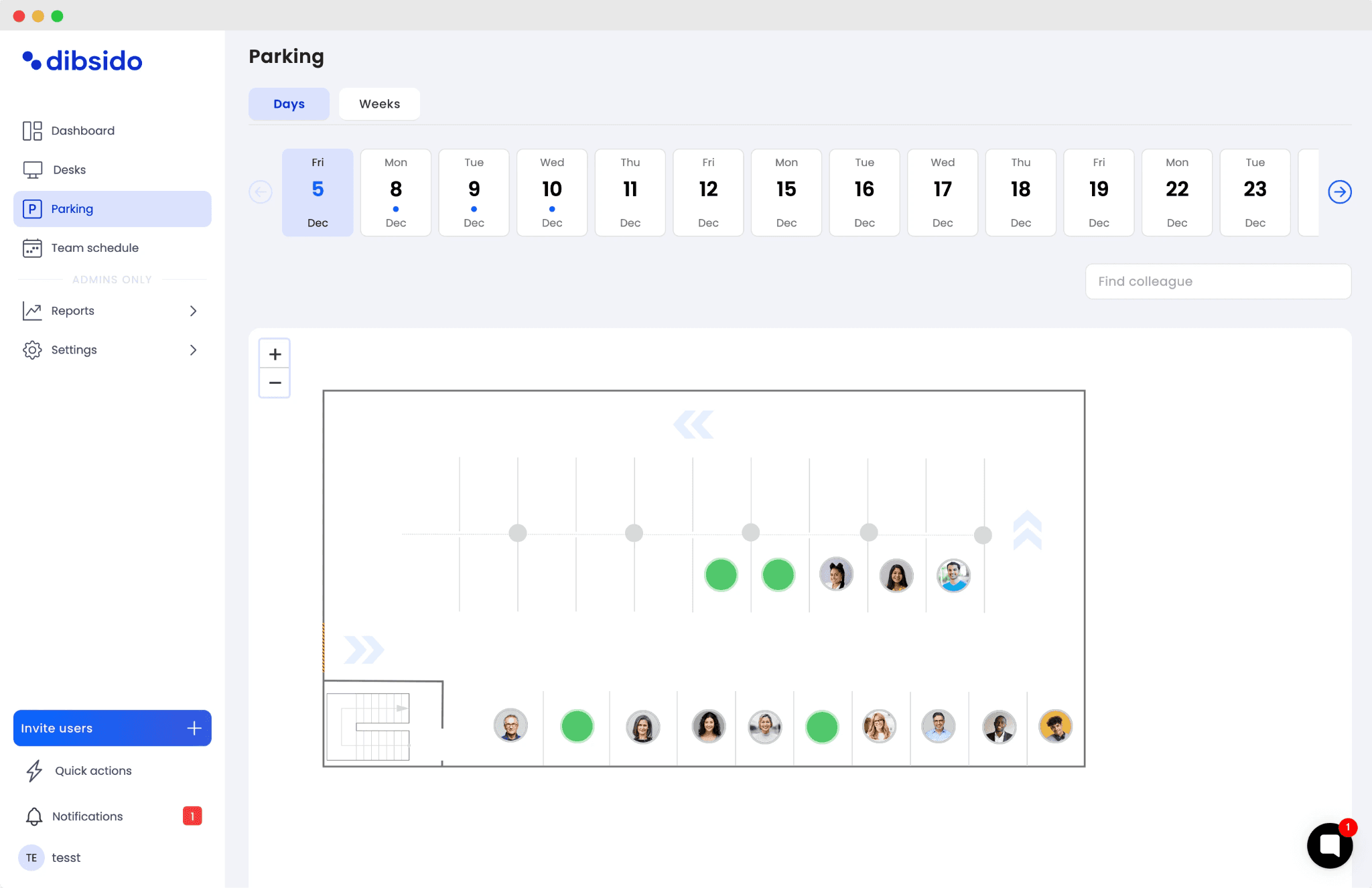
Dibsido parking is built for exactly this model. Employees see the lot as an interactive map and book the spot they need for a full day, half day, or custom length, from the web app or their phone. A booked spot shows as taken to everyone else and returns to the pool automatically when the booking ends or the person releases it, so the days someone works from home free the spot for a colleague without anyone having to chase it. Busy mornings are handled with a waiting list, electric-vehicle spots can be pinned on the map, no-shows are tracked, and administrators can see how the lot is actually used over time so the reserved-versus-shared balance can be reviewed with data instead of guesswork.
What stays a human decision is the policy: which spots remain reserved, what the waiting-list rules are, and how repeat no-shows are handled. The tool books, releases, and shows; people and policy decide. Setup takes minutes rather than an IT project, and the free plan includes a small number of parking spots, so you can measure your real occupancy before committing anything. If your assigned lot is half empty on the days people cannot park, try it free and run the numbers on your own site.
FAQ: assigned vs shared office parking
Should companies get rid of assigned parking spaces?
For most hybrid offices, the answer is to share the majority and keep a few. Assigned spots made sense when everyone came in five days a week. When attendance is two or three days a week, a spot tied to one named person sits empty whenever that person works from home, while colleagues without a spot cannot park. Moving most spots into a shared, booked pool serves far more of your staff from the same lot. Keep reserved spots only where they are genuinely warranted, such as accessibility, visitors, and specific operational roles.
How much office parking sits empty on a typical day?
It depends on your attendance pattern, and the honest answer is that you should measure it rather than guess. The mechanism is simple: in a hybrid office where people come in two or three days a week, any spot assigned to a single person is unused on the days that person is not in. Assigned lots therefore look full on paper and half empty on the tarmac. A booking system that records reservations against your real spot count gives you the actual number for your site instead of a rule of thumb.
Is shared (booked) parking fairer than assigned spots?
Usually yes. Assigned parking distributes spots by seniority or by who arrived first at the company, and then keeps them frozen regardless of who actually needs to drive in. Shared parking distributes access by need on the day: whoever is coming into the office and books gets a spot while they last, and a fair waiting list handles the busiest days. Fairness depends on the rules you set, so publish them and apply them the same way for everyone.
How do you switch from assigned to shared parking without upsetting staff?
Treat it as change management, not a software rollout. Measure how many assigned spots sit empty so the case is evidence rather than opinion. Keep the exceptions people will rightly defend, such as accessibility and visitor spots. Explain the why, which is that shared parking lets more colleagues park, not that the company is taking something away. Then pilot the shared pool with one team or one section of the lot before converting everything, and adjust the rules based on what the first weeks show.
What is shared or booked office parking?
Shared parking means the spots belong to the office rather than to named individuals. Instead of one permanent spot per person, employees reserve a spot for the day, half day, or period they need through an app, the spot is theirs while the booking lasts, and it returns to the pool when they do not book. The same set of spots then serves many more people across the week than a fixed one-spot-per-person allocation ever could.
Do you still need some assigned or reserved parking spots?
Yes, keep a small reserved layer. Accessibility spots are non-negotiable and often a legal requirement. Visitor and delivery spots need to be predictable. A handful of operational roles, such as staff who must be on site every day or carry heavy equipment, may justify a permanent spot. The goal is not zero assigned spots, it is to reserve only what is genuinely warranted and share the large majority that currently sits idle.
How does a shared parking booking system work?
Employees see the available spots on an interactive map of the lot and book the day they are driving in, for a full day, half day, or custom length. The booked spot shows as taken to everyone else and returns to the pool automatically when the booking ends or the person releases it. Busy days are handled with a waiting list, electric-vehicle spots can be marked on the map, and administrators can see utilization over time. People and policy make the decisions, the system just handles booking, release, and visibility.
Our platform is designed to empower businesses of all sizes to work smarter and achieve their goals with confidence.