The total amount of office space in major Western markets is shrinking for the first time in two decades. Some buildings are being converted into apartments, others demolished. The math behind the trend changes what your next lease will look like.
Major Reconstruction
And now, a quick flight through the office building world.
Take a look at the photo. What do you see?
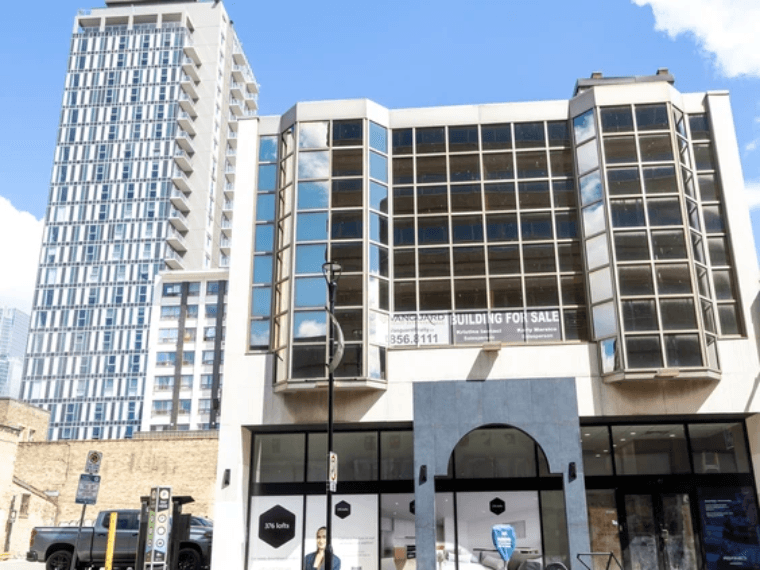
a) an office
b) an apartment building
c) both
Aaaand it's both... sort of!
London just completed its first large office-to-apartment conversion. What used to be a law office is now 23 small apartments and one-bedroom flats, all finished in less than a year.
This office-to-housing trend is gaining momentum. In the U.S., for the first time in 20 years, office space is shrinking more than it's growing, with many properties either demolished or converted into housing.
The big question is: as office space continues to shrink, what will that mean for commercial and office rents? 📈
💡 On a related note: Chances are, office rents might be heading up soon. But hybrid work flips the math on its head! In our chat, Michaela Novotná explained why a smaller office with 100 desks can be enough for 250 people, and how to make that work in practice.
What the Shrinking Office Footprint Actually Looks Like
The Commercial Edge mid-2025 US office report found that net office stock contracted by roughly 23 million square feet in the first half of 2025 - the largest reduction in two decades and a sharp break from the slow growth that defined every prior period since the early 2000s. The drivers are split between three things: outright demolition of older Class B and C buildings, conversion to residential, and re-purposing for life sciences or industrial use. In the UK, London alone is forecast to lose roughly 5 million sq ft of office space through conversion over the next three years, according to CBRE. The downstream effect on rents is uneven - prime Grade A stock continues to set new highs while the long tail of older, harder-to-let space drops or disappears. The practical implication for tenants is that the cheapest option (older Grade B office) is shrinking fast, while the most expensive option (new Grade A) is the only category actually growing. The middle of the market is hollowing out.
What This Means for Your Office Planning
Don't assume "wait for cheaper space" is a strategy. The market is moving toward less, more expensive office stock, not more.
Renegotiate sooner. Lease cycles starting now should plan for higher per-square-foot costs.
Re-test your real footprint requirement. A team of 100 with a hybrid policy needs roughly 60-70 desks, not 100.
Watch your building. If your landlord is quiet about reinvestment, the building may be in the conversion or demolition queue - factor that into renewal decisions.
The cheapest square foot is the one you don't rent. Hybrid sizing math is the easiest lever before any negotiation begins.