Every January, millions of people set ambitious goals. By February, nearly half have already given up. The problem isn't that we lack motivation — it's that we're relying on the wrong framework entirely.
The Numbers Don't Lie
23% of people quit their New Year's resolutions in the first week. By the end of January, this number jumps to 43%.
Ouch.
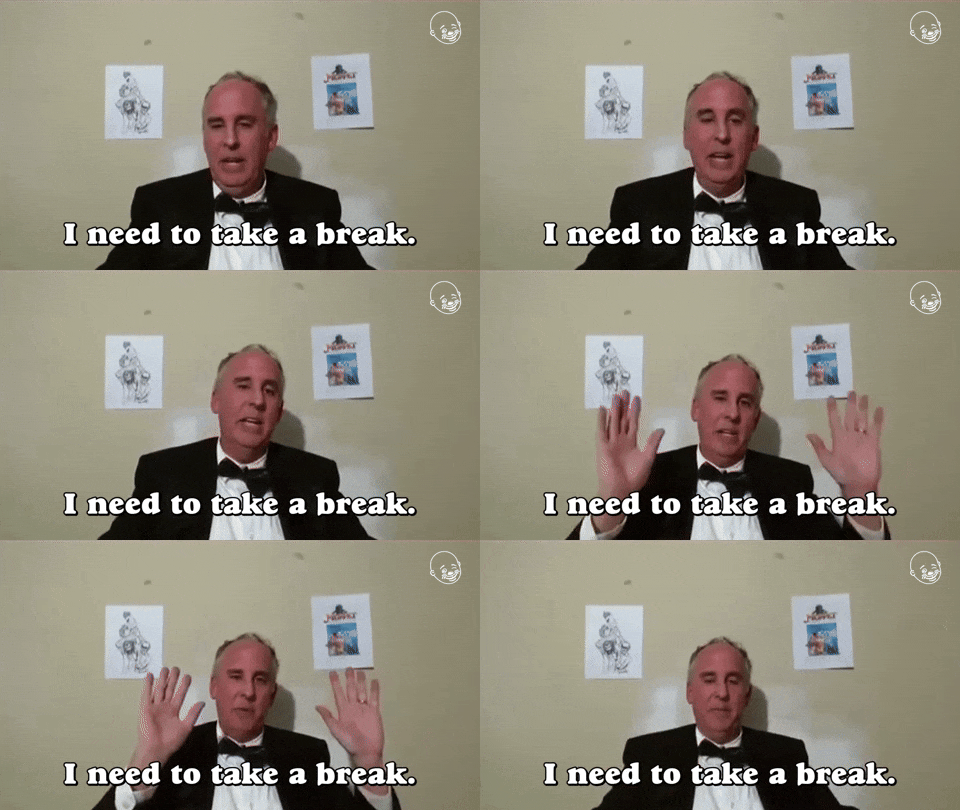
My mindset when I look at my unrealistic New Year’s resolutions at the end of January:
But what if the problem isn't us, but the whole idea of setting goals?
After all, both successful and unsuccessful people set the same goals. Every Olympian wants to win a gold medal, just like every job candidate wants to land the job. Goals are universal. It's the habits and systems that make the difference.
Here's how to shift from vague goals to actionable systems:
1. Start with a trigger. Pick something that happens regularly in your day-to-day life. For example: "When I get home before dinner..."
2. Attach a habit to it. Make the habit small and achievable: "...I'll go for a 15 minute run."
3. Repeat and adapt. Build consistency by linking the habit to the trigger every time.
Examples of systems you can try:
🎯 Exercise: Trigger: "When I get home after work..." → Habit: "...I'll go for a 15 minute run."
🎯 Decluttering: Trigger: "Whenever I buy something new..." → Habit: "...I'll donate one old item."
🎯 Inbox management: Trigger: "After I read a newsletter..." → Habit: "...I'll immediately archive it." Kind of like a burn after reading moment.
Here's James Clear's article about goals vs. systems.
The Science Behind Systems Over Goals
The trigger-habit approach Lisa describes is rooted in what behavioral scientists call "implementation intentions" — and it's one of the most well-studied techniques in habit formation. Research consistently shows that people who define a specific cue, time, and action are significantly more likely to follow through than those who simply set an intention.
James Clear popularized this framework in his book Atomic Habits, arguing that the difference between people who achieve lasting change and those who don't isn't goal-setting — it's system-building. Goals tell you where you want to go. Systems tell you how to get there, one small action at a time. The resolution statistics back this up: only about 9% of Americans report successfully keeping their resolutions through the year. The ones who do almost always point to routine and structure, not willpower.
How to Apply This at Work
The trigger-habit framework isn't just for personal goals. Office managers can use the same approach to build better work routines:
Email: "When I sit down at my desk in the morning, I process my inbox for 15 minutes before anything else."
Meetings: "After every meeting, I spend 2 minutes writing down action items before opening Slack."
End of day: "When I close my laptop, I write tomorrow's top 3 priorities on a sticky note."
Small, consistent systems beat big, ambitious goals every time.
The same logic applies to your office: willpower won't keep desk and parking bookings tidy, but a system will. Dibsido is the system most hybrid offices end up building in spreadsheets and then regretting. Try it free for 14 days, no card needed.