Flexible office leases are on the rise as companies seek to adapt to changing work habits. In part one of our interview with a senior commercial real estate consultant at iO Partners Fabien Rada, we explore the latest trends shaping Czech workplaces.
Dibsido: How big a topic is the return to the office for employees in the Czech Republic right now? Are people feeling strong emotions about it?
Fabien Rada: According to our data, the pressure people feel to return to the office isn’t nearly as strong as many might assume.
More than half of employees say they don’t feel any push to come in more often.
Another 22% say they feel positively motivated by their employers to come into the office.
Only about a quarter, roughly 24%, feel that their company has tightened its rules.
Another interesting takeaway is how differently various sectors approach this issue.
Dibsido: In what way?
Fabien Rada: Take the tech industry, for example. Companies have traditionally been pretty responsive to the expectations of top talent, which is why flexibility is much more common there. Many tech employees work remotely three or four days a week, sometimes even more. If we look across all industries, the average is closer to two to two and a half remote days per week.
On the other hand, companies in the service sector tend to be more conservative. There, remote work averages about one day per week and is considered a standard benefit, especially among younger workers.
Interestingly, many employees report working remotely less days than are officially permitted.
Dibsido: Let’s talk about desk sharing. How common is it, and how are employees reacting to this trend?
Fabien Rada: According to our numbers, almost 40% of employees now use shared desks, which can be higher than many people expect. But, and this is important, only about half of employees feel comfortable with the concept of hot-desking. Simply put, Czech workers tend to prefer having their own personal desk.
“Our data shows that desk sharing is generally more accepted when combined with bigger flexibility to work remotely."
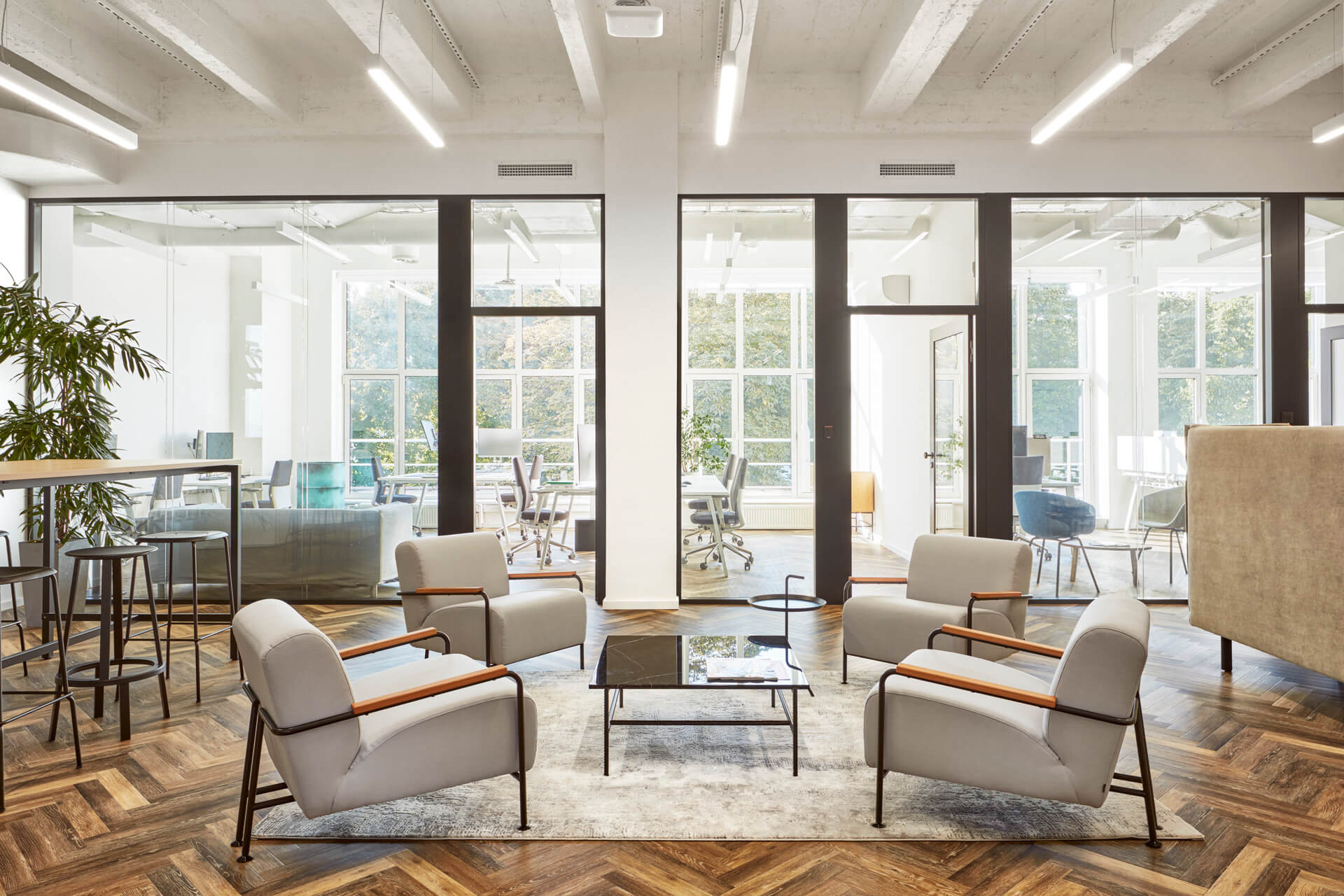
McCann Ericsson, Refurbishment of existing offices, completed 2024, Architects: Michal Kunc, Michal Matějíček, Jana Šandallová, Project management: iO Partners, Photo: Peter Fabo
Dibsido: Does that mean companies are now looking for smaller offices, since they’re working with shared desks and need less space?
Fabien Rada: Exactly. Companies have adapted to the reality of hybrid work by downsizing their office space. On any given day, about half of the desks are unoccupied, so optimizing space becomes a natural step. Some companies sublease part of their offices, while others switch to layouts designed around shared workstations.
Dibsido: Are companies adopting technology to manage this new, more flexible style of working?
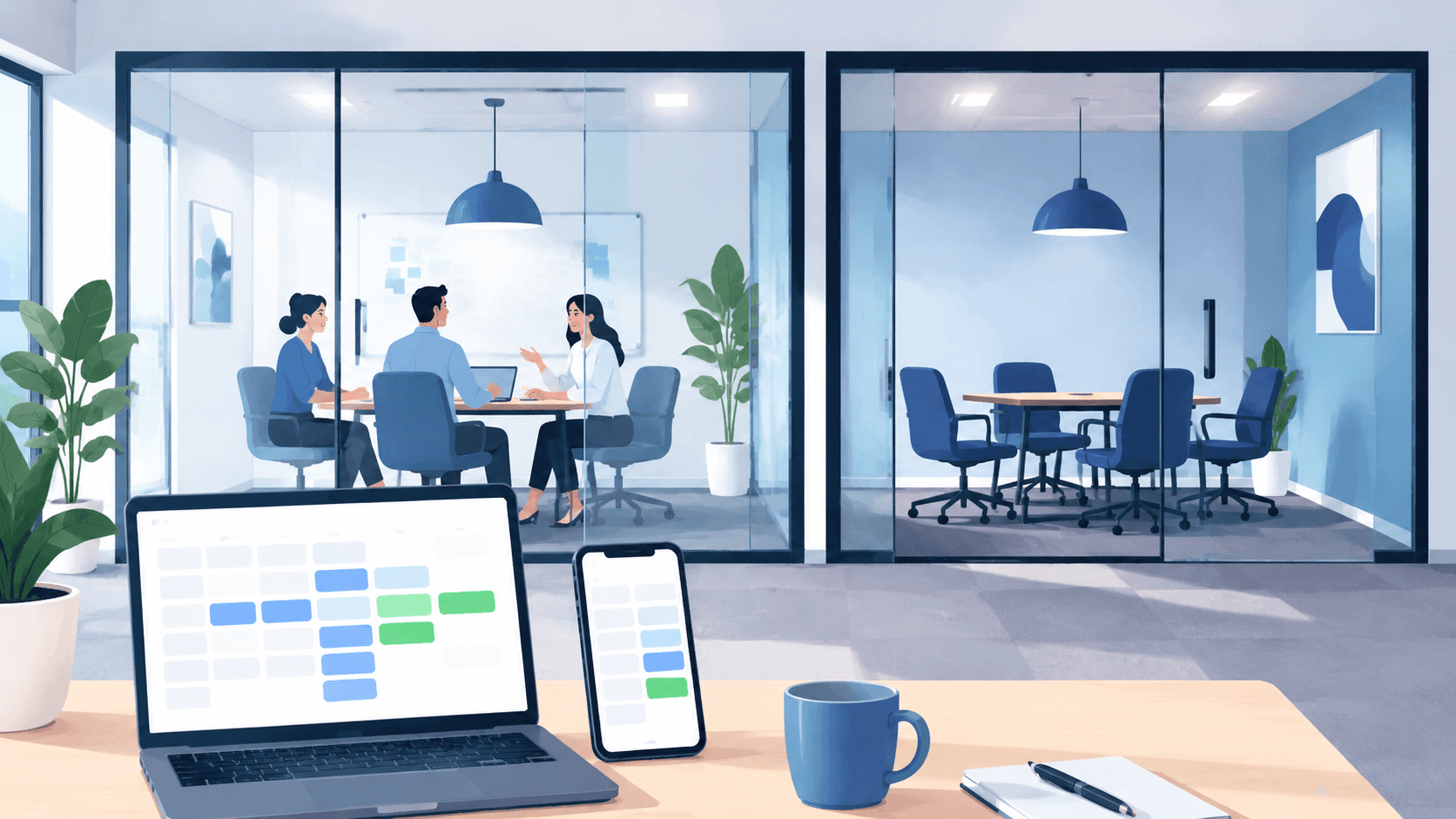
Fabien Rada: This varies a lot across the market. Large multinational companies usually take a more structured approach: deep analyses, workplace audits, and desk-booking tools to make sure the office runs smoothly.
In contrast, many smaller Czech firms still manage workspace more informally and are less inclined to invest in such technologies. When a Czech company does adopt these tools, it’s usually a sign of a progressive, forward-thinking approach.
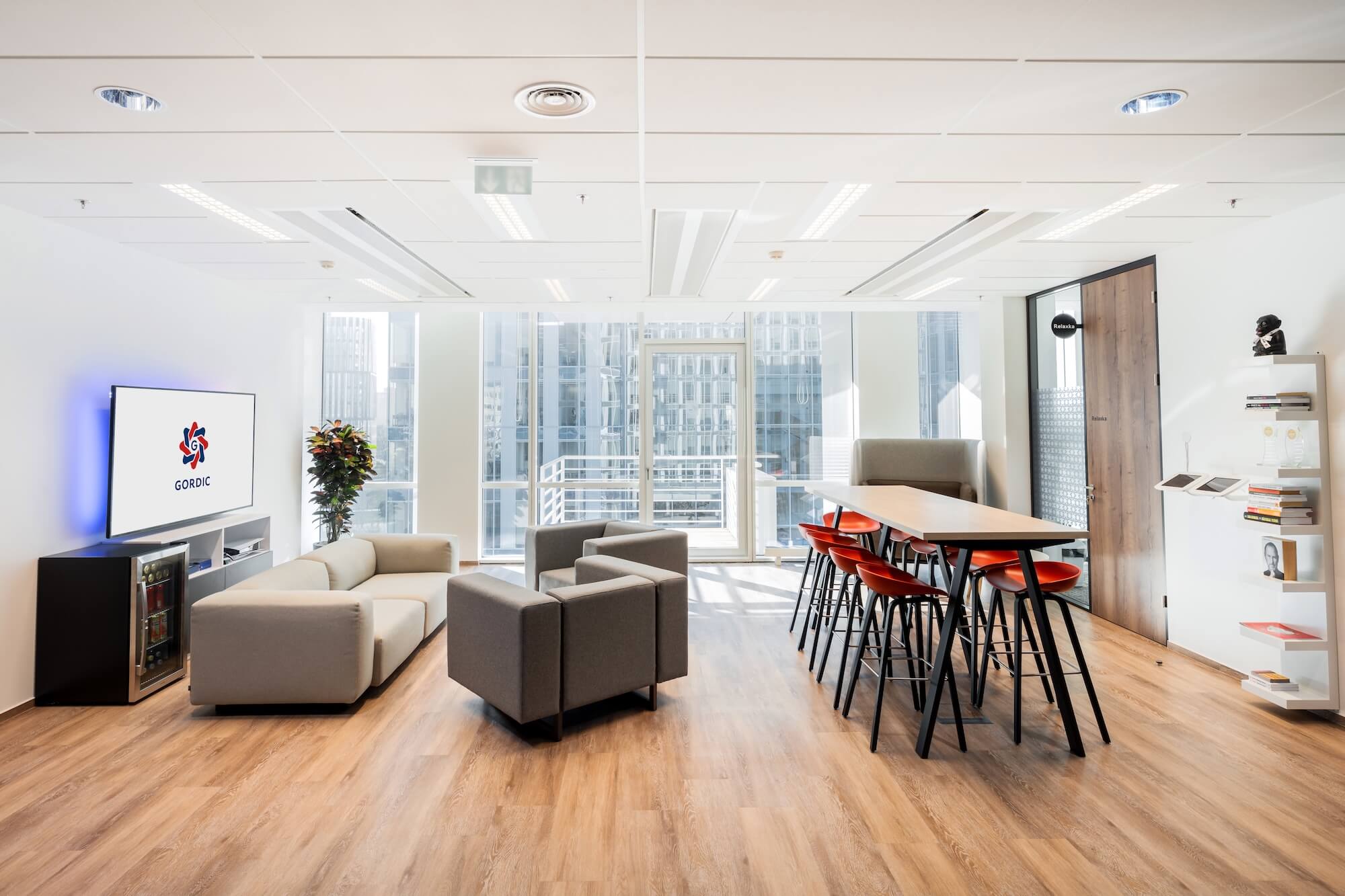
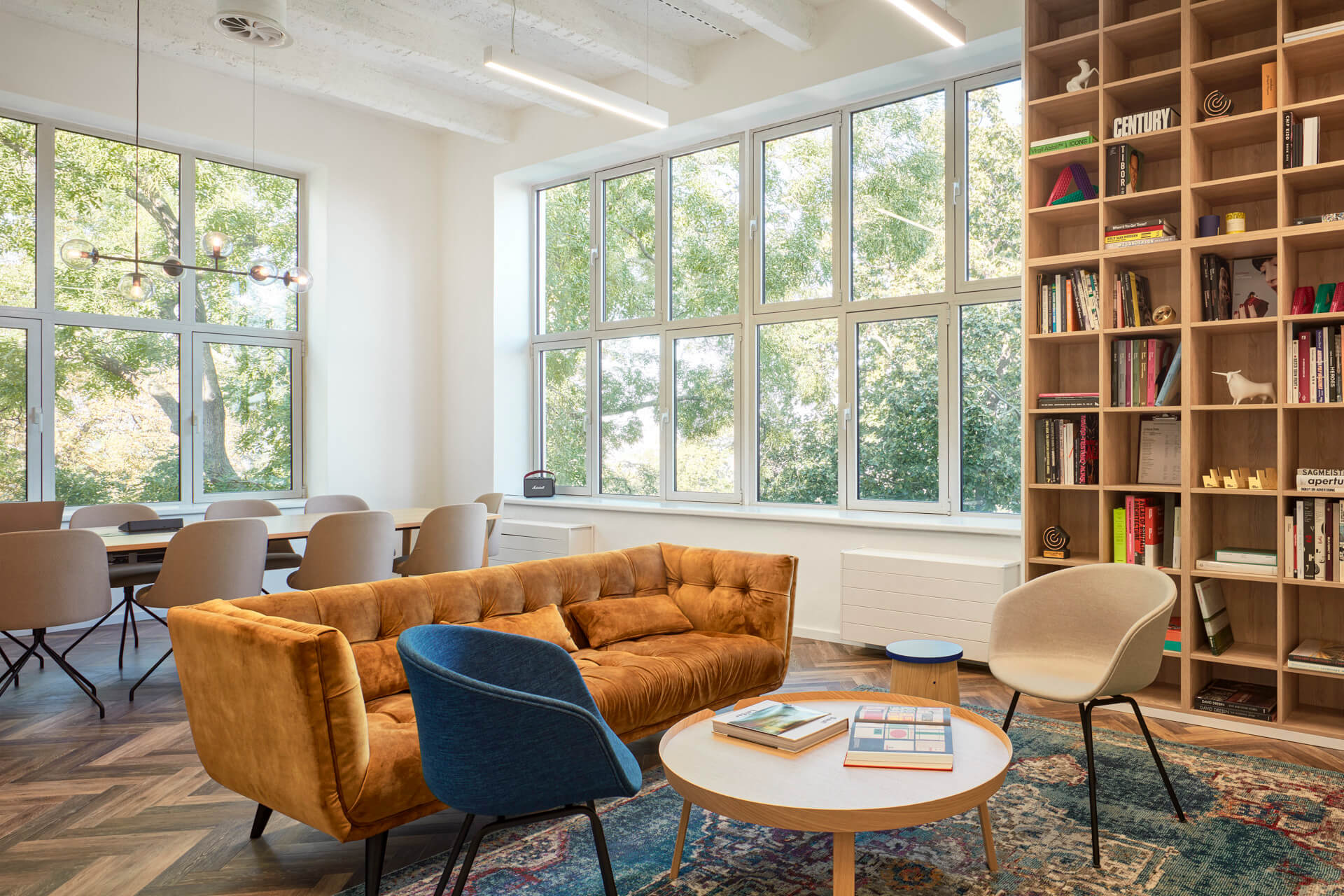
Gordic, New office fit-out, The Park, Prague 4, completed 2023, Project management: iO Partners, Photo: Peter Fabo
Dibsido: What about office leasing trends? Are certain types of spaces becoming more popular?
Fabien Rada: Absolutely. Flexible and serviced offices are booming. These providers, like WeWork or Scott.Weber, rent big office floors, break them into smaller units, and add shared lounges, meeting rooms, and coworking areas. Companies that don’t want to commit to a five-year lease suddenly have an option where they can take space for just a few months and scale up or down as needed.
Dibsido: Is this trend mostly among startups?
Fabien Rada: It used to be. But now we’re seeing large corporations using flexible offices too: for project teams, temporary expansions, or simply because they like the vibe—casual design and the layout structured into zones for focused work, collaboration, and informal meetings.
“Flexible offices now represent about 3.4% of Prague’s office stock, almost double the share they held before Covid.”
Dibsido: And what about office design? What’s trending right now?
Fabien Rada: Industrial-style spaces are still incredibly popular, especially among younger companies. Old factories or warehouse conversions have a certain authenticity, you see that a lot in places like Karlín in Prague.
Of course, when it comes to converting real former industrial halls and factory spaces into offices, like the former Economia offices in Forum Karlín, these spaces can face some challenges, such as heating issues or poor acoustics.
Overall, though, office design has become much more relaxed since the pandemic. Layouts are more casual, and even big corporates want spaces that feel comfortable rather than formal.
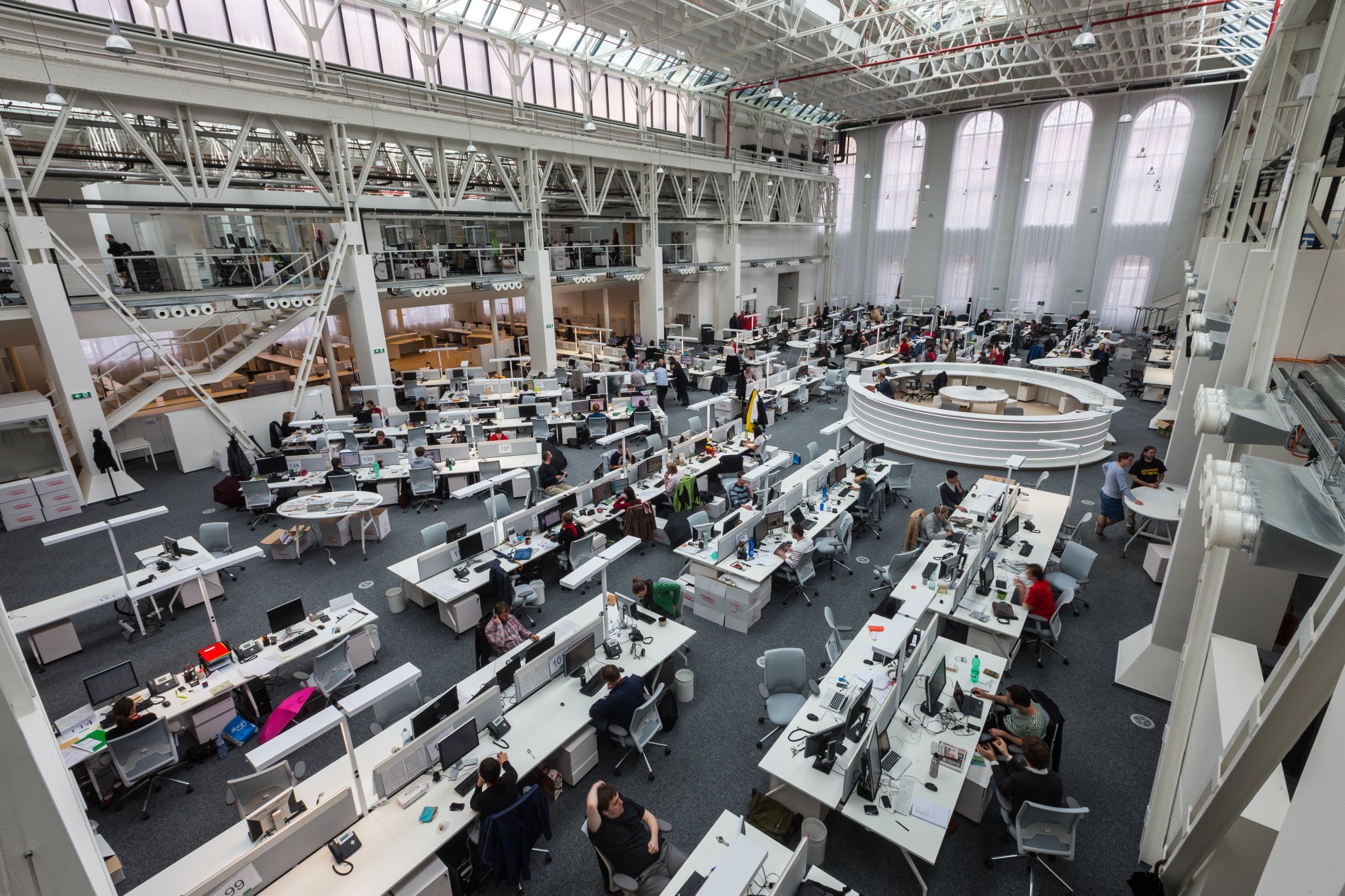
Source: hn.cz
About iO Partners:
iO Partners, headquartered in Vienna, offers complete real estate services — office and industrial leasing, capital markets, valuations, and project management — operating in the Czech Republic, Austria, Croatia, Romania, Serbia, Slovakia, and Hungary. With 30 years of experience in the CEE region, iO Partners combines innovation and entrepreneurial agility with global expertise ensured by its preferred partnership with JLL, delivering smart and efficient solutions.
Our platform is designed to empower businesses of all sizes to work smarter and achieve their goals with confidence.